 Save to Pinterest
 There's something almost meditative about butternut squash season—the moment you slice into one and that warm, honeyed smell fills your kitchen, you know comfort is just minutes away. My neighbor knocked on my door one October afternoon with a basket of squashes from her garden, and I'd never roasted one before, so I decided to turn it into soup right then and there. The transformation from raw chunks to silky, golden liquid felt like magic, and by the time I ladled it into bowls, I understood why this recipe had become her go-to when the weather turns cold.
I made this for my book club years ago, worried it might seem too simple for a group of people who loved to cook. Instead, everyone asked for the recipe within seconds of their first spoonful, and I realized that sometimes the most memorable meals aren't the fanciest ones—they're the ones that make you feel seen and cared for. That soup became my signature dish, the one people request when they hear I'm bringing something to share.
Ingredients
- Butternut squash (1 medium, about 1.2 kg): Roasting it first concentrates its natural sugars and gives you that deep, caramelized flavor that defines this soup—don't skip this step even though it takes extra time.
- Onion (1 large) and carrots (2 medium): These build the aromatic base that keeps the soup from tasting one-note; the carrots add subtle sweetness that plays beautifully with the squash.
- Garlic (2 cloves): Mince it finely so it distributes evenly and adds a gentle, warm undertone without overpowering.
- Vegetable stock (800 ml): Use good-quality stock here—it's the backbone of your soup, so taste it first and pick one you'd actually drink.
- Coconut milk (200 ml): This creates that velvety texture and subtle sweetness; if you prefer, heavy cream works beautifully for a richer version.
- Olive oil (2 tbsp): Split between roasting the squash and sautéing vegetables for two layers of flavor.
- Cumin and nutmeg: These spices are essential—they whisper warmth into the soup without announcing themselves loudly.
- Salt and pepper: Taste as you go; you'll likely need more than you think because blending dilutes flavors slightly.
- Fresh herbs and pumpkin seeds (optional garnish): These finish the bowl with texture and brightness that makes people pause and savor each spoonful.
Tired of Takeout? 🥡
Get 10 meals you can make faster than delivery arrives. Seriously.
One email. No spam. Unsubscribe anytime.
Instructions
- Get the oven ready:
- Preheat to 200°C (400°F) so it's hot and ready when you are—this ensures even, golden roasting of your squash.
- Roast the squash:
- Toss your diced squash with a tablespoon of olive oil, salt, and pepper, then spread it in a single layer on a baking tray. Roast for about 25 minutes until the edges are golden and the flesh is fork-tender; you'll know it's ready when the kitchen smells unbelievably rich.
- Build your base:
- While the squash roasts, warm the remaining olive oil in a large pot over medium heat and add your chopped onion and carrots. Cook them for 5 to 7 minutes, stirring occasionally, until they're soft enough that a wooden spoon slides through easily.
- Add the aromatics:
- Stir in your minced garlic, cumin, and nutmeg, and cook for just one minute—you want that fragrant bloom without the garlic browning or tasting bitter.
- Combine everything:
- Add the roasted squash to your pot, pour in the vegetable stock, and bring the whole thing to a boil before reducing the heat to a gentle simmer for 10 minutes. This lets everything meld together.
- Blend to silky smoothness:
- Using an immersion blender, purée the soup directly in the pot until it's completely smooth and velvety—if you're using a regular blender, work carefully in batches to avoid splashing hot soup. This is where the texture transforms from chunky to that luxurious restaurant quality.
- Finish with creaminess:
- Stir in your coconut milk or cream, heat gently without letting it boil, and taste carefully before adjusting the salt and pepper. You're looking for that perfect balance where the squash sweetness shines without the soup tasting flat.
- Serve with style:
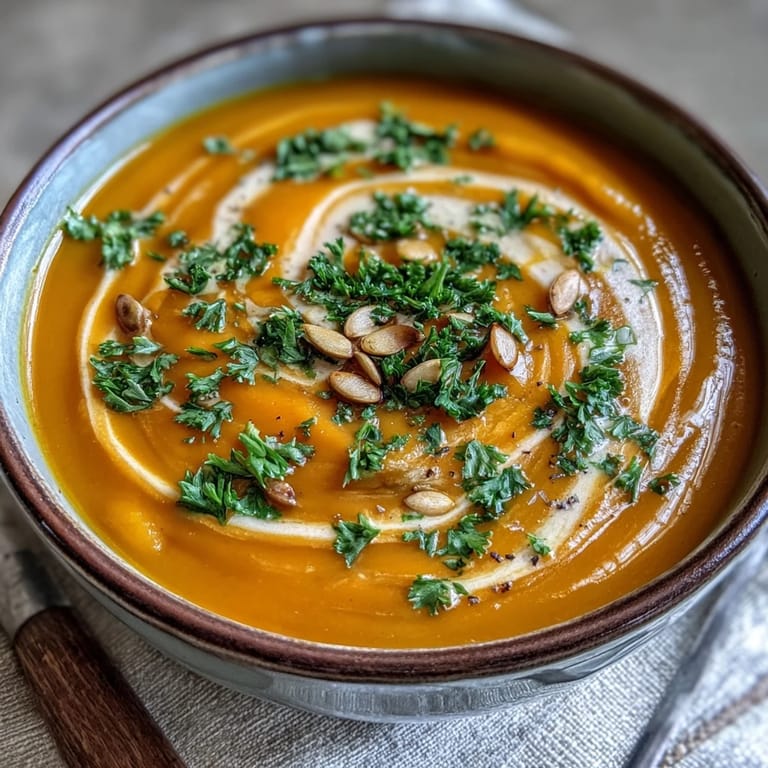
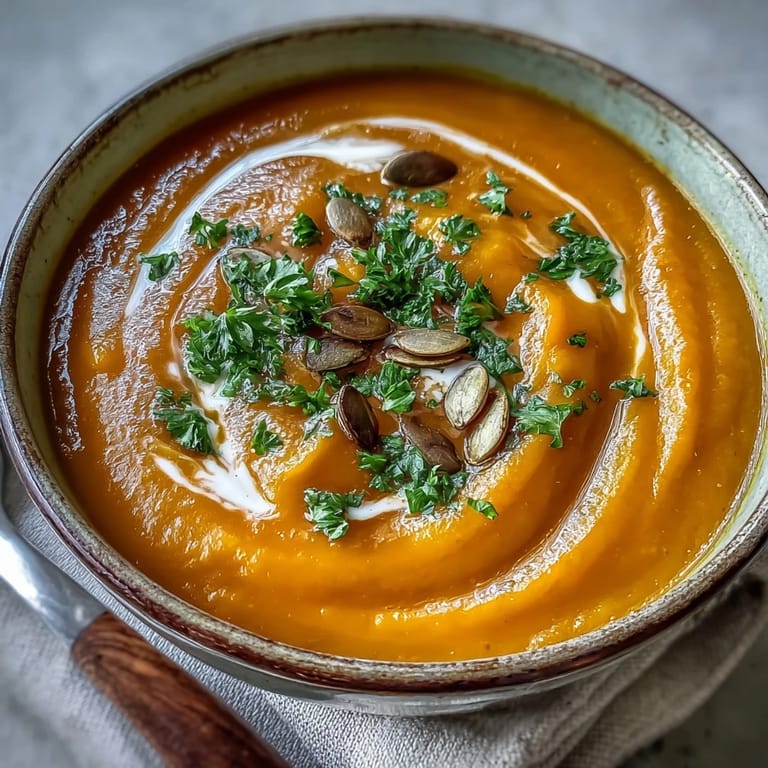
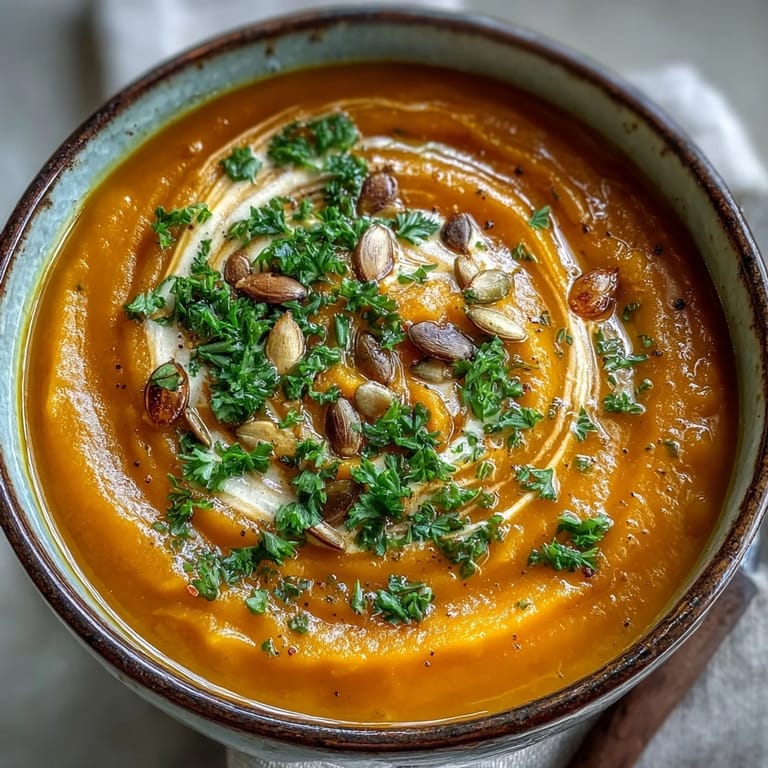
- Ladle into bowls and top with fresh herbs, a sprinkle of toasted pumpkin seeds, and a drizzle of coconut milk or cream if you're feeling generous. Each garnish adds texture and makes the bowl feel intentional.
 Save to Pinterest
 The first time someone told me this soup changed their whole day—that they'd been stressed and tired but one bowl made them feel like they were taking care of themselves—I understood the real power of feeding people well. Soup has this way of turning kitchen time into something that matters beyond nutrition, and this one does it every single time.
The Roasting Secret
Roasting might seem like an extra step, but it's where the actual magic lives in this soup. When you spread those diced squash pieces on a baking tray and let them caramelize, their natural sugars deepen and develop flavors that raw squash could never offer. I learned this by accident when I once tried to speed things up by just simmering raw squash, and the soup tasted sweet and one-dimensional instead of complex and warming. The roasting step isn't optional; it's the difference between a good soup and one people remember.
Texture and Blending Matters
The blending technique makes a real difference in how this soup feels in your mouth and how guests perceive it. An immersion blender gives you the most control because you can blend right in the pot and stop exactly when the texture feels perfect—silky without being over-processed. If you use a regular blender, work in smaller batches and blend longer than feels necessary; under-blended soup loses that restaurant-quality smoothness that makes people think you spent hours in the kitchen.
Customizing Your Warmth
This soup is endlessly adaptable once you understand its foundation, which is why it became my go-to when I wanted to serve something impressive but wasn't sure what people craved. For an extra kick that surprises diners, add a pinch of chili flakes or cayenne pepper while sautéing the vegetables—just enough to add intrigue without heat. You can also swap heavy cream for coconut milk if that's what you have, adjust the spice balance toward more nutmeg for deeper comfort or more cumin for earthier warmth, and experiment with different garnishes until you find your favorite combination.
- A swirl of good olive oil and crispy sage leaves creates an elegant finish that feels fancy without any extra work.
- Toasted pumpkin seeds or sunflower seeds add crunch that makes each spoonful interesting and textural.
- Fresh cilantro or parsley brighten the warmth and prevent the soup from feeling too heavy even when served as a main course.
 Save to Pinterest
 This soup has become my answer to almost every occasion—a welcome gift when friends are struggling, a starter for holiday meals, a quiet dinner for myself when I need something that feels nourishing and kind. Make it once and you'll understand why it's so beloved.
Recipe Questions & Answers
- → Can I freeze this soup?
Yes, this soup freezes exceptionally well for up to 3 months. Cool completely before transferring to airtight containers. Thaw overnight in the refrigerator and reheat gently on the stovetop, adding a splash of liquid if needed.
- → What's the best way to achieve the smoothest texture?
Roasting the squash first ensures it's fully tender and naturally sweet, which breaks down more easily. Use an immersion blender directly in the pot for the smoothest results. If using a standard blender, work in batches and vent steam carefully.
- → Can I make this soup ahead of time?
Absolutely. This soup actually develops deeper flavor when made 1-2 days ahead. Store in the refrigerator and reheat slowly over low-medium heat, stirring occasionally. Add extra coconut milk or stock if it thickens too much.
- → What can I substitute for coconut milk?
Heavy cream creates an even richer version, while half-and-half offers lighter creaminess. For dairy-free alternatives, try cashew cream or oat milk. Each option yields slightly different richness levels but all work beautifully.
- → How do I adjust the seasoning?
Taste after blending and before adding the coconut milk. Start with salt and pepper, then adjust spices. More cumin adds earthiness, extra nutmeg enhances warmth, and a pinch of chili flakes introduces gentle heat. Season gradually and taste as you go.