 Save to Pinterest
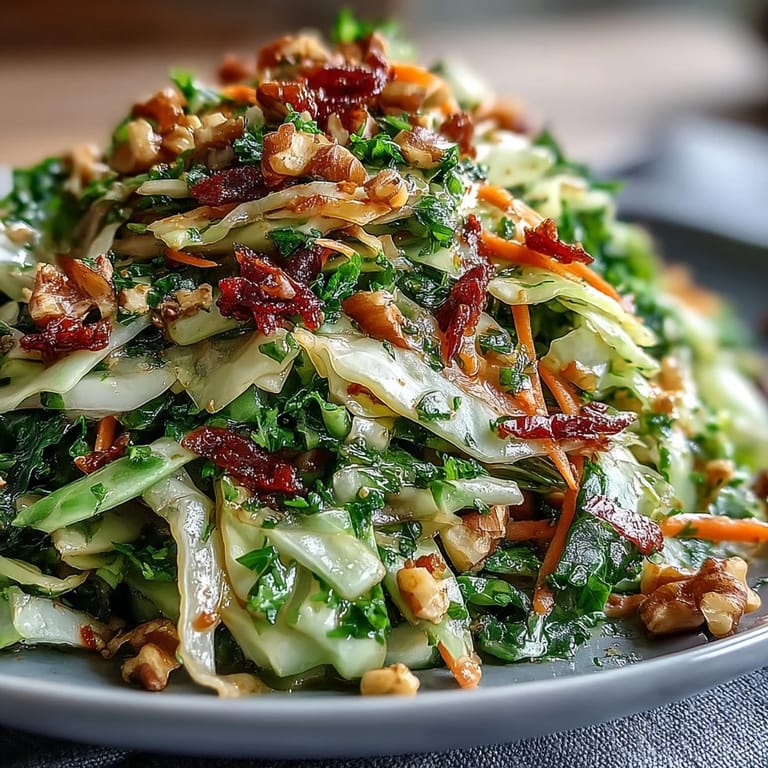
 Last spring, I found myself staring at a head of green cabbage at the farmers market, wondering why I'd never really cooked one properly before. The vendor mentioned she always sautés hers first, just to soften it, then builds a salad around it while it's still warm. That single suggestion changed everything—suddenly cabbage became this tender, almost sweet canvas that actually absorbs flavors instead of just sitting there being crunchy and forgettable. This warm salad with its tangy dressing became my go-to when I wanted something that felt both comforting and bright.
I made this for my sister during a chaotic family dinner where everyone showed up hungry and irritable. There was something almost meditative about standing at the stove, listening to the cabbage sizzle and soften, while the kitchen filled with that sweet, subtle aroma. By the time I tossed it all together with that mustard-vinegar dressing, the mood had shifted—suddenly we were all leaning in, tasting it while it was still warm, and asking for seconds before the main course even arrived.
Ingredients
- 1 medium green cabbage (about 900 g), cored and thinly sliced: This is your star, and thinness matters—you want those ribbons delicate enough to wilt slightly when warm but sturdy enough to hold the dressing without falling apart.
- 1 large carrot, peeled and julienned: The sweetness here balances the vinegar beautifully, and the thin cuts mean they absorb warmth and flavor while staying crisp.
- 1 small red onion, thinly sliced: Red onion adds a gentle bite and visual pop, and slicing it thin means you get sharpness without that aggressive raw onion punch.
- 1 red bell pepper, thinly sliced: This brings both color and a subtle sweetness that rounds out the salad's personality.
- 2 tbsp fresh parsley, chopped: Don't skip this—parsley adds a fresh, grassy note that ties everything together and prevents the salad from feeling one-dimensional.
- 3 tbsp extra-virgin olive oil: Quality matters here since it's doing the heavy lifting in the dressing; use something you'd actually taste on bread.
- 2 tbsp apple cider vinegar: The tanginess is what makes this salad sing—it cuts through the richness and keeps everything tasting alive and bright.
- 1 tbsp Dijon mustard: This emulsifies the dressing and adds a subtle complexity that simple vinaigrette never achieves.
- 1 tsp honey (or maple syrup for vegan option): Just enough sweetness to round the flavors without making it taste like dessert.
- 1/2 tsp sea salt and 1/4 tsp freshly ground black pepper: Grind the pepper fresh—pre-ground tastes tired compared to what you get when you crack it yourself.
- 1/4 cup toasted walnuts or sunflower seeds (optional): Toasting these yourself, even briefly in a dry pan, makes them taste a hundred times better and adds a satisfying crunch.
- 30 g feta cheese, crumbled (omit for vegan/dairy-free): If using, add this right before serving so it doesn't get lost in the warm vegetables.
Tired of Takeout? 🥡
Get 10 meals you can make faster than delivery arrives. Seriously.
One email. No spam. Unsubscribe anytime.
Instructions
- Get your pan ready and start the cabbage:
- Heat 1 tablespoon of olive oil in a large skillet over medium-high heat until it shimmers just slightly—you'll see it move like water across the pan. Add your sliced cabbage and listen for that satisfying sizzle; stir it frequently for 4 to 5 minutes until the edges turn translucent and the whole thing softens but still holds its vibrant green color.
- Build your warm salad base:
- Transfer the warm cabbage to a large mixing bowl and immediately add the julienned carrot, red onion, bell pepper, and parsley while the cabbage is still releasing heat. The warmth will gently begin softening the raw vegetables without cooking them completely, which means you get the best of both textures.
- Make your dressing shine:
- In a small bowl, whisk together the remaining 2 tablespoons of olive oil, apple cider vinegar, Dijon mustard, honey, salt, and pepper until it looks like it's starting to emulsify and become creamy rather than staying separated. The mustard is doing the work here, helping everything bind together.
- Bring it all together:
- Pour the dressing over the vegetables and toss everything thoroughly—use your hands if you want, because you'll feel when everything is evenly coated and the warmth is distributing evenly. Let it rest for 5 minutes so the flavors meld and the vegetables absorb the dressing without becoming soggy.
- Finish and serve:
- Top with toasted nuts or seeds and crumbled feta if you're using them, and serve while it's still warm or let it cool to room temperature—both ways work beautifully, though warm is magic.
 Save to Pinterest
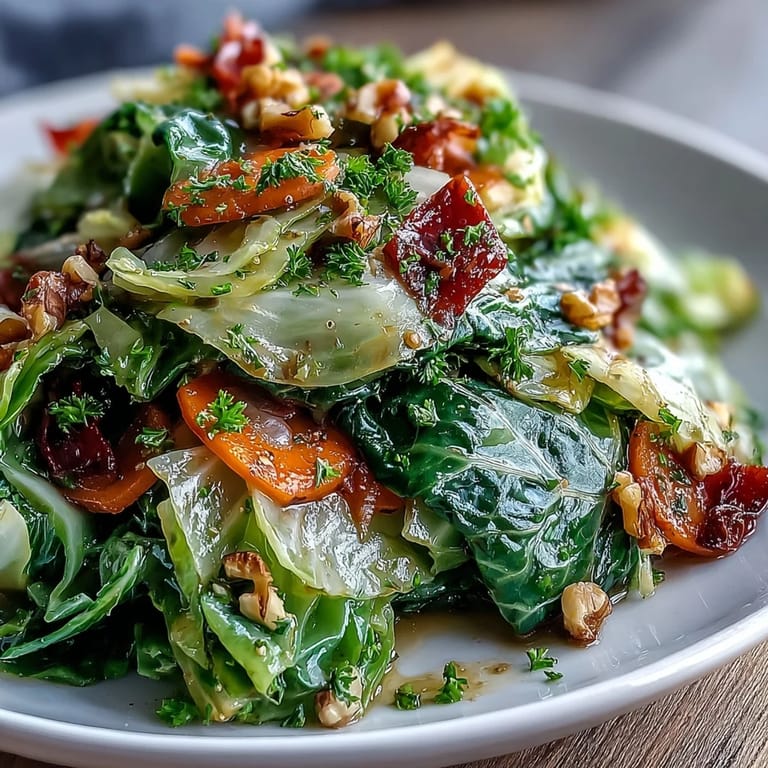
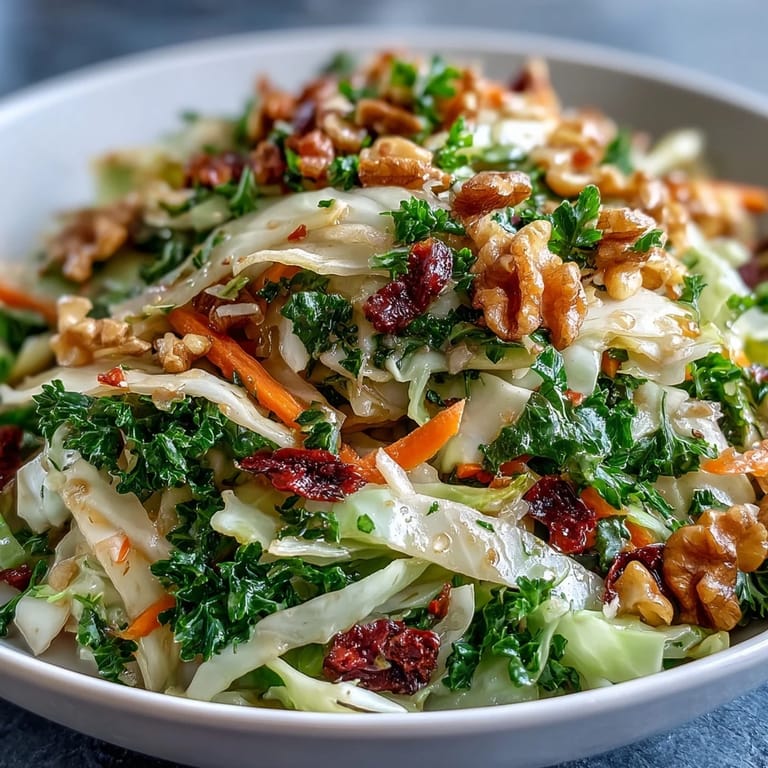
 There's a moment when this salad stops being just ingredients and becomes something whole—usually around the time you pour the dressing and everything glistens under the kitchen light. That's when you know you've made something worth eating, something that transforms cabbage from a humble vegetable into the reason people will ask for your recipe.
The Warmth Factor
Warm salads are underrated in most home kitchens, but there's something deeply satisfying about eating something that's still releasing steam onto your fork. The warmth of the cabbage doesn't just soften the raw vegetables around it—it actually opens them up, making them taste more like themselves, more vibrant. It's the kind of detail that separates a salad you tolerate from one you actually crave.
Building Flavor Through Balance
This salad works because nothing overshadows anything else—the mustard doesn't drown out the vinegar, the honey doesn't mask the sharpness, and every vegetable gets its moment. It's about restraint, about knowing that more dressing doesn't mean more flavor, and that sometimes the best recipe is the one that lets each ingredient stay honest. I learned that lesson slowly, through over-dressed salads and muddy flavors, until finally one worked and I understood what I'd been missing.
How to Make It Your Own
The beauty of this salad is that it's a framework, not a prison—you can add shredded apple for sweetness, thin radish slices for crunch, or swap in different vinegars depending on what you have and what mood you're in. I've made it with white wine vinegar when I wanted something more delicate, and with rice vinegar when I craved something milder and rounder. The core idea stays the same, but the variations are endless and they're all good.
- Thinly sliced radishes or shredded apple add crunch and subtle sweetness if you want extra texture.
- Try serving this alongside grilled chicken or roasted salmon to turn it into a complete meal.
- Store leftovers in the refrigerator for up to 2 days and serve at room temperature for best flavor.
 Save to Pinterest
 This warm cabbage salad has become my answer to the question of what to cook when I want something fast but still feel like I made something real. It's one of those recipes that reminds you why cooking matters—not because it's complicated, but because it turns simple things into something that tastes like care.
Recipe Questions & Answers
- → Can I serve this salad cold?
Yes, while best served warm or at room temperature, you can refrigerate leftovers for up to 2 days. Let it come to room temperature before serving for the best texture and flavor.
- → What protein pairs well with this dish?
Grilled chicken, roasted salmon, or pan-seared tofu complement the flavors beautifully. The tangy dressing cuts through rich proteins while the vegetables provide freshness.
- → Can I use different vegetables?
Absolutely. Try adding thinly sliced radishes, shredded apple for sweetness, or swap bell peppers for other colors. The base of sautéed cabbage remains the star.
- → How do I make this completely vegan?
Replace honey with maple syrup in the dressing and omit the feta cheese topping. Walnuts or sunflower seeds add satisfying crunch and protein instead.
- → Why sauté the cabbage instead of serving it raw?
Brief cooking softens the cabbage's texture and removes any harsh bitterness while preserving its vibrant color and crunch. It creates a more approachable, comforting dish.