 Save to Pinterest
 My neighbor showed up one summer afternoon with a rotisserie chicken and zero ideas for lunch, so we raided her pantry together and somehow ended up with this salad. The crunchy ramen noodles were her genius move—she'd been hoarding a package and decided this was finally its moment. What started as improvisation became the thing she requests every time we're planning something casual, and honestly, it's become my go-to when I need something that feels both impressive and effortless.
I made this for a coworker's birthday potluck on a Thursday, and people kept coming back to refill their plates long after the fancy casseroles had been forgotten. Someone asked for the recipe before they'd even finished eating, and I realized it wasn't just the flavors—it was how it stayed crispy and alive while sitting out, never getting soggy or tired.
Ingredients
- Shredded green cabbage (4 cups): This is your foundation, and it's forgiving—slice it however thick or thin you like, thinner if you want it to meld better with the dressing, thicker if you're into serious crunch.
- Rotisserie chicken (2 cups shredded): The rotisserie does all the work for you, and pulling it apart with your fingers is honestly faster than using a knife.
- Shredded carrots (1 cup): Buy them pre-shredded if you're short on time—nobody will know, and you'll thank yourself for it.
- Scallions (3, thinly sliced): Slice them right before tossing so they don't have time to get limp and lose their snap.
- Sliced almonds, toasted (1/2 cup): Toasting them yourself for even five minutes changes everything; they go from bland to almost buttery, and the kitchen smells incredible.
- Instant ramen noodles (1 3-oz package, crushed): Crush them right in the bag if you want to feel productive, or break them into pieces over the salad—use only the noodles and save that flavor packet for something else.
- Fresh cilantro (1/4 cup, optional): It's optional but worth adding if you have it; it brings a brightness that makes the whole thing feel alive.
- Toasted sesame seeds (1 tablespoon): Toast them in a dry pan for just a minute and watch them closely—they go from raw to perfect to burned in what feels like a heartbeat.
- Vegetable oil or toasted sesame oil (1/4 cup): Toasted sesame oil adds more flavor, but vegetable oil keeps things neutral if you're feeding people who might be picky.
- Rice vinegar (2 tablespoons): This is milder than distilled vinegar and lets the other flavors shine without being sharp.
- Honey (2 tablespoons): It rounds out the dressing and keeps it from tasting too savory or vinegary.
- Soy sauce (1 tablespoon): A little goes a long way here—it's salty and umami-rich, so resist the urge to dump in more.
- Toasted sesame oil (1 tablespoon): This is different from regular sesame oil and worth having on hand; it's deeper and nuttier.
- Fresh ginger (1 teaspoon grated): Grate it fresh right before mixing the dressing, or you'll lose that peppery zing that makes it special.
- Garlic clove (1, minced): One clove is just enough to whisper flavor without shouting; mince it fine so it distributes evenly.
- Kosher salt and black pepper: Taste as you go because your soy sauce might already have saltiness hiding in it.
Tired of Takeout? 🥡
Get 10 meals you can make faster than delivery arrives. Seriously.
One email. No spam. Unsubscribe anytime.
Instructions
- Gather and prep your vegetables:
- Shred your cabbage, pull the chicken apart, and get your carrots and scallions ready—this takes about ten minutes if you're not rushing. Having everything prepped before you touch the dressing is honestly the secret to making this feel effortless.
- Toast your almonds and sesame seeds:
- Throw them in a dry skillet over medium heat and listen for when they start smelling nutty and toasted, usually a minute or two for sesame seeds and three to five for almonds. Don't walk away—toasting is quick and the line between perfect and burned is basically invisible.
- Assemble the salad base:
- In your largest bowl, combine the cabbage, chicken, carrots, scallions, almonds, crushed ramen, cilantro, and sesame seeds—it'll look like a lot but it compresses down when you toss it. Don't be shy about filling the bowl nearly to the rim.
- Make the dressing:
- Whisk together the oils, vinegar, honey, soy sauce, sesame oil, ginger, garlic, salt, and pepper in a separate small bowl or jar until it's emulsified and no oil pools are floating on top. If you're using a jar, just cover and shake it for thirty seconds and you're done.
- Combine everything with intention:
- Pour the dressing over the salad and toss thoroughly, making sure every piece of cabbage gets coated and the ramen noodles are distributed so you get them in every bite. This is where you taste and adjust—more salt, more sweetness, more tang, whatever feels right to you.
- Decide your timing:
- Serve immediately if you're into crispy, crunchy texture, or let it sit for ten minutes if you prefer the noodles slightly softened and the cabbage more pickled-feeling. Both versions are delicious; it just depends on what you're craving.
 Save to Pinterest
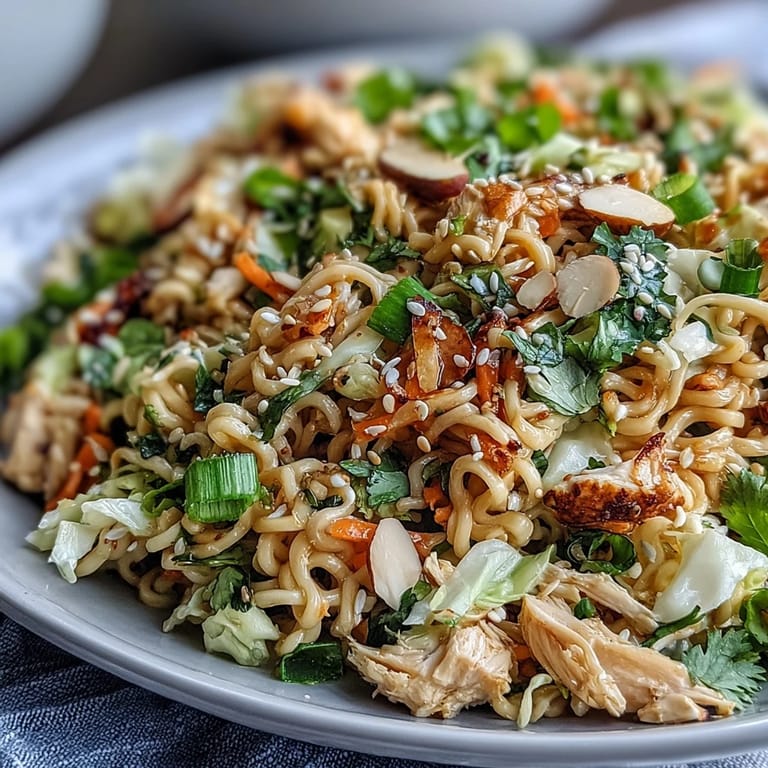
 There's something genuinely satisfying about watching someone taste this for the first time and see their face realize that salad can be this fun and filling. It's the kind of dish that makes people linger at the table longer, asking questions and taking notes.
The Magic of Texture Contrast
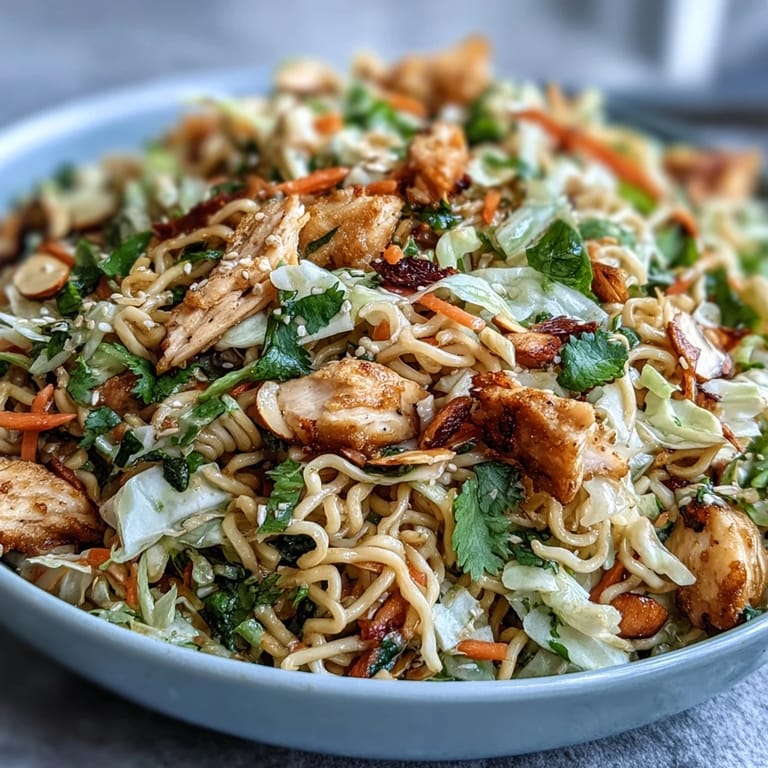
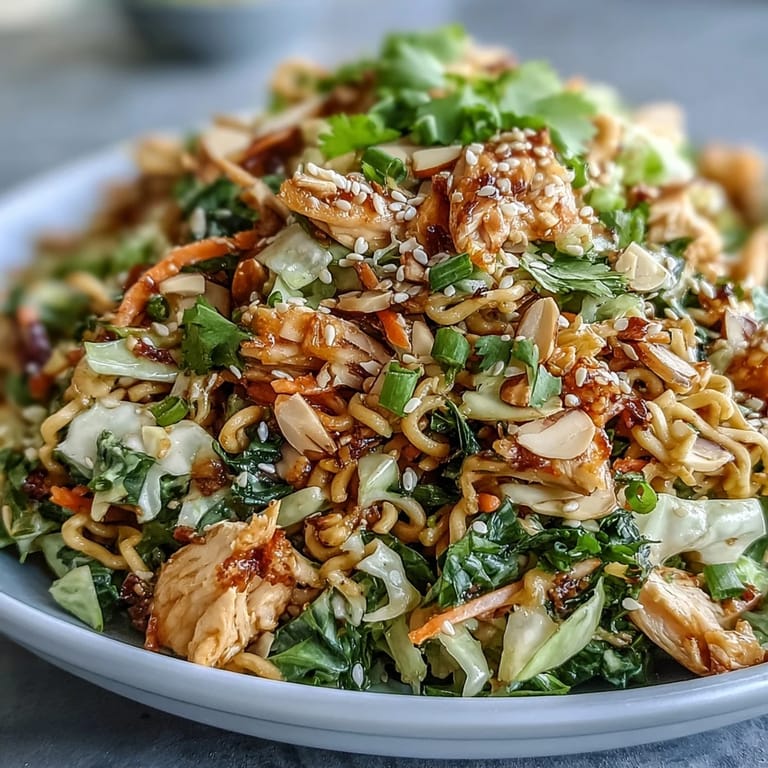
This salad works because every element has a different texture—soft chicken, crispy noodles, tender cabbage, crunchy almonds—and they all stay distinct right up until you eat it. That contrast is what keeps it interesting across multiple bites, and it's why people keep coming back for more instead of getting bored halfway through.
Dressing as the Foundation
The dressing is balanced enough to make sense with or without the cilantro, and I've learned that tasting it before it hits the salad is actually worth doing. You might discover you want it sweeter, more vinegary, or more ginger-forward, and adjusting it by the teaspoon is way easier than trying to balance a giant bowl of salad after the fact.
Make It Your Own
This salad is genuinely flexible, and that flexibility is part of why it's become my go-to formula when I'm cooking for a crowd. Swap the almonds for peanuts or sunflower seeds, throw in sliced radishes or snap peas for extra crunch, or add a handful of shredded beets if you want it to look more impressive on a table.
- Radishes and snap peas add another layer of crunch that keeps the salad interesting even as it sits.
- A splash of lime juice in the dressing brings brightness if your lemons are sad or you just feel like changing things up.
- Leftovers stay decent for about a day if you store the dressing separately, which honestly never happens because this disappears too quickly.
 Save to Pinterest
 This salad has become my answer to almost every casual gathering because it's fast, it impresses people, and it somehow tastes even better when you're eating it with others. Make it once and you'll understand why it keeps showing up on my table.
Recipe Questions & Answers
- → Can I make this ahead of time?
You can prepare all ingredients in advance and store them separately. Toss everything with the dressing just before serving to maintain the crunch. The noodles will soften over time, so for best texture, assemble within an hour of serving.
- → What can I substitute for ramen noodles?
Crispy rice noodles, chow mein noodles, or even broken wonton wrappers work well as alternatives. For a gluten-free option, try crushed plain rice cakes or toasted quinoa for added crunch.
- → Is this dish served warm or cold?
This is traditionally served cold or at room temperature, making it ideal for picnics, potlucks, and summer gatherings. The cool, crisp vegetables contrast beautifully with the crunchy noodles and creamy dressing.
- → Can I use raw chicken instead of rotisserie?
Absolutely. Grill, bake, or poach chicken breast and shred it once cooled. Season the chicken with salt, pepper, and a bit of garlic powder while cooking for extra flavor that complements the sesame dressing.
- → How do I store leftovers?
Store in an airtight container in the refrigerator for up to one day. Keep in mind the noodles will continue to soften as they absorb the dressing. If meal prepping, store the dressing separately and toss right before eating.
- → What protein alternatives work well?
Shredded pork, tofu, or cooked shrimp are excellent substitutes. For a vegetarian version, use edamame or crispy tofu cubes. The sesame dressing pairs well with most proteins, making this highly adaptable.