 Save to Pinterest
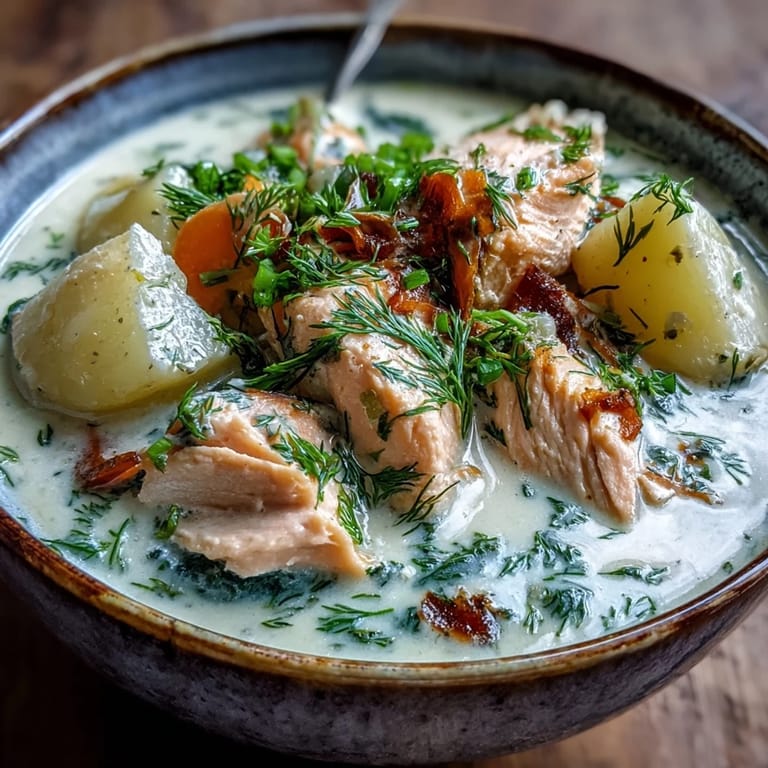
 There's something about a bowl of Finnish salmon soup that makes you feel like you're sitting in a cabin by a frozen lake, even if you're nowhere near Scandinavia. My first encounter with this soup wasn't in Finland—it was at a friend's apartment on a particularly gray Tuesday evening when she casually mentioned her grandmother's recipe and decided to make it on the spot. Twenty minutes later, the kitchen smelled like buttery vegetables and the sea, and I understood why this dish has been warming Finnish families for generations.
I made this soup for my partner on a Sunday when everything felt a bit heavy, and halfway through the first spoonful, they just closed their eyes and smiled. That's when I realized this wasn't just food—it was the kind of dish that quietly reminds you why home cooking matters, why sitting down together with something warm in your hands changes the mood of an entire day.
Ingredients
- Skinless salmon fillet (400 g): Use fresh, quality salmon if you can—you'll taste the difference the moment it touches your tongue, and cutting it into small cubes ensures it cooks evenly without falling apart.
- Potatoes (600 g): Waxy varieties hold their shape beautifully in soup, so reach for Yukon Gold or similar rather than floury types that might turn to mush.
- Carrot and leek: These vegetables create the foundation of flavor that makes the broth taste homemade rather than rushed, so don't skip them or cut corners on prep.
- Fresh dill: Buy it as close to cooking as possible—its brightness fades quickly, and you'll want that sharp, green intensity when you taste it at the end.
- Heavy cream (200 ml): This is what transforms the soup from nice to absolutely silky; don't substitute with milk unless you genuinely prefer a lighter version.
- Fish stock: Homemade is remarkable if you have it, but good store-bought stock won't disappoint, and water works perfectly fine if you're honest about seasoning to taste.
- Salt and white pepper: White pepper keeps the soup visually clean, but use what you have—the flavor matters more than the color.
- Butter (1 tbsp): This small amount of fat carries flavor in a way oil simply can't, creating that rich, rounded taste that makes you want another bowl.
Tired of Takeout? 🥡
Get 10 meals you can make faster than delivery arrives. Seriously.
One email. No spam. Unsubscribe anytime.
Instructions
- Build your flavor base:
- Melt butter over medium heat and add the onion, leek, and carrot, stirring occasionally until they soften and release their sweetness—you'll smell it before you see it, a gentle fragrance that's the opposite of rushed. This isn't sautéing hard or fast; it's coaxing out natural sugars slowly.
- Create the foundation:
- Add potatoes, bay leaf, and stock, bringing everything to a boil before dropping the heat to let it simmer gently for 12 to 15 minutes. The potatoes should be almost tender when you test with a fork—they'll cook a bit more when the salmon joins.
- Introduce the salmon with care:
- Gently stir in the salmon cubes and let them simmer for 5 to 6 minutes until they're opaque and just cooked through, resisting the urge to poke and move them around constantly. You want tender salmon, not flaked salmon, so treat it gently.
- Finish with creaminess and brightness:
- Turn off the heat slightly, pour in the heavy cream and chopped dill, then season with salt and white pepper—never let it boil after the cream goes in or it might separate. Taste as you go because everyone's salt preference is different, and you're creating something personal here.
- Serve with intention:
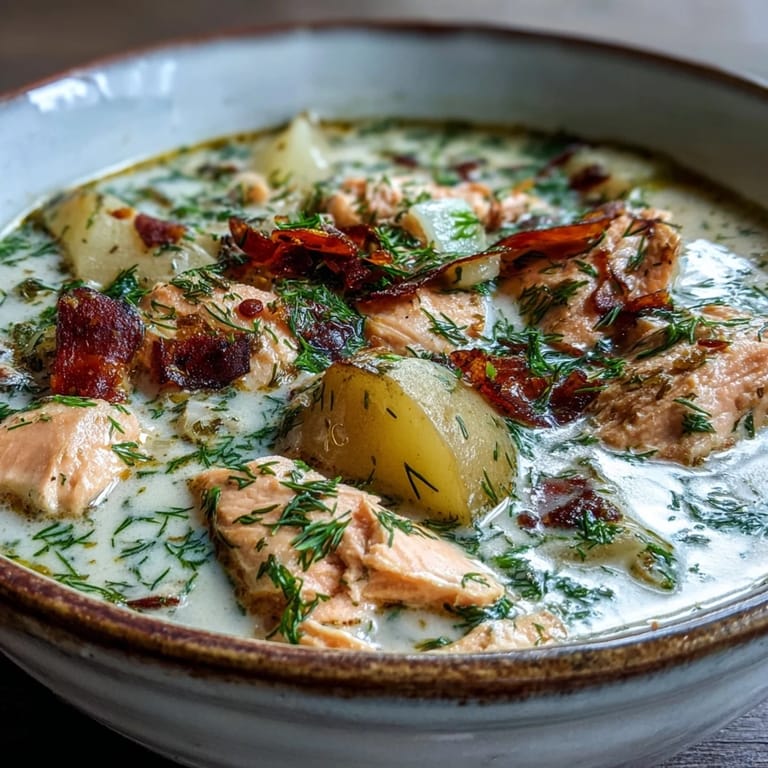
- Ladle into bowls, sprinkle reserved dill on top, and if you're feeling generous, add a tiny knob of butter to each bowl. The dill garnish isn't decoration—it's the final flavor moment that makes people pause mid-conversation and ask what that wonderful taste is.
 Save to Pinterest
 There was a moment during my third time making this when I realized I wasn't following the recipe anymore—I was listening to the soup, adjusting based on how it looked and smelled, knowing instinctively when it was ready. That's the feeling you're working toward, the point where technique becomes intuition and a recipe becomes something you truly own.
The Nordic Simplicity Philosophy
Finnish cooking doesn't complicate things—it honors them. This soup embodies that philosophy completely: a handful of good ingredients, no unnecessary techniques, and the kind of result that makes you wonder why every soup couldn't be this straightforward. When you taste this for the first time, you'll understand why Nordic food has seen a renaissance; it proves that restraint and quality often outperform elaborate effort.
Pairing and Serving Moments
Serve this soup with dark rye bread, crispbread, or even just crusty sourdough if that's what you have—there's something about the texture contrast between creamy soup and crispy bread that makes the meal feel complete. A simple green salad alongside keeps things balanced, and if you're in a Scandinavian mood, a glass of cold white wine or light beer pairs beautifully without overwhelming the delicate salmon flavor.
Variations and Flexibility
Once you make this soup once, you'll start seeing it as a template rather than a rigid instruction. You can swap the salmon for cod or halibut and achieve similar results, or add a handful of fresh spinach just before serving for earthiness. Some people love a squeeze of lemon at the end for brightness, while others prefer to let the dill be the only green note—there's genuine freedom here within the basic structure.
- If you want a lighter version, reduce cream to 100 ml and add another 100 ml of whole milk instead for a silkier taste.
- Smoked salmon creates an entirely different character—use it sparingly and add it at the very end so it stays distinct rather than melting into the broth.
- Make extra and freeze in portions for the kind of comfort food that's ready whenever you need it most.
 Save to Pinterest
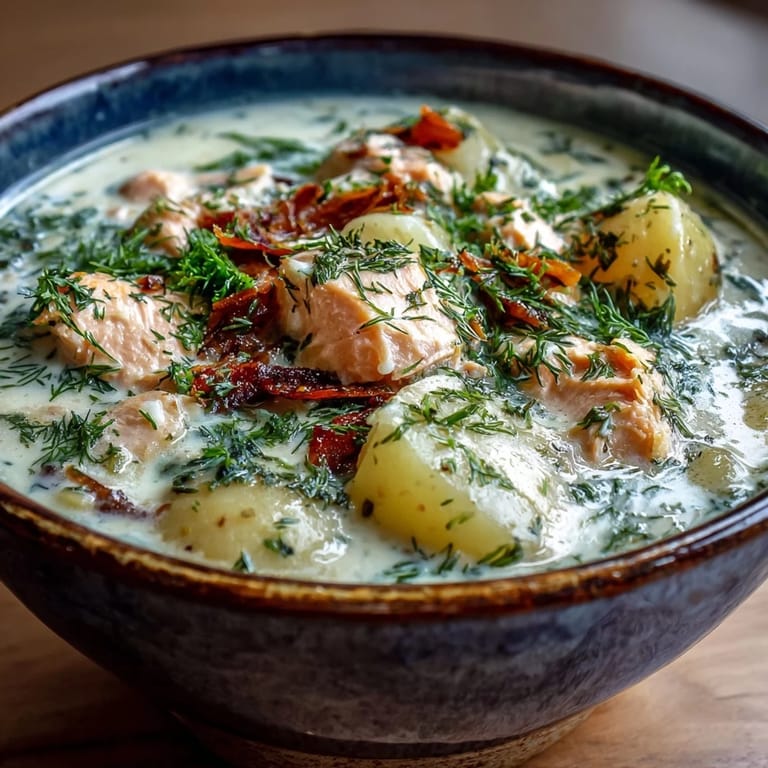
 This soup is the kind you'll find yourself making again without thinking too hard about it, the way your hands remember movements and your kitchen remembers its own rhythm. That's when you know a recipe has truly become yours.
Recipe Questions & Answers
- → Can I use frozen salmon instead of fresh?
Yes, frozen salmon works well. Thaw it completely and pat dry before cutting into cubes to ensure even cooking and prevent excess water in the soup.
- → What can I substitute for heavy cream?
You can use half-and-half for a lighter version, or full-fat coconut milk for a dairy-free alternative. Avoid low-fat options as they may curdle when simmered.
- → How do I prevent the salmon from overcooking?
Add salmon when potatoes are almost tender, simmer gently for only 5-6 minutes, and remove from heat once the fish turns opaque. The residual heat will finish cooking it.
- → Can I make this soup ahead of time?
Yes, but add the cream and dill only when reheating to preserve freshness. Store the base soup separately and gently reheat without boiling to maintain the salmon's texture.
- → What type of potatoes work best?
Waxy potatoes like Yukon Gold hold their shape well in soup. Avoid russet potatoes as they break down too easily and can make the broth cloudy.
- → Is fish stock necessary or can I use water?
While water works in a pinch, fish stock adds depth and authentic flavor. You can also use vegetable stock or enhance water with a splash of white wine.