 Save to Pinterest
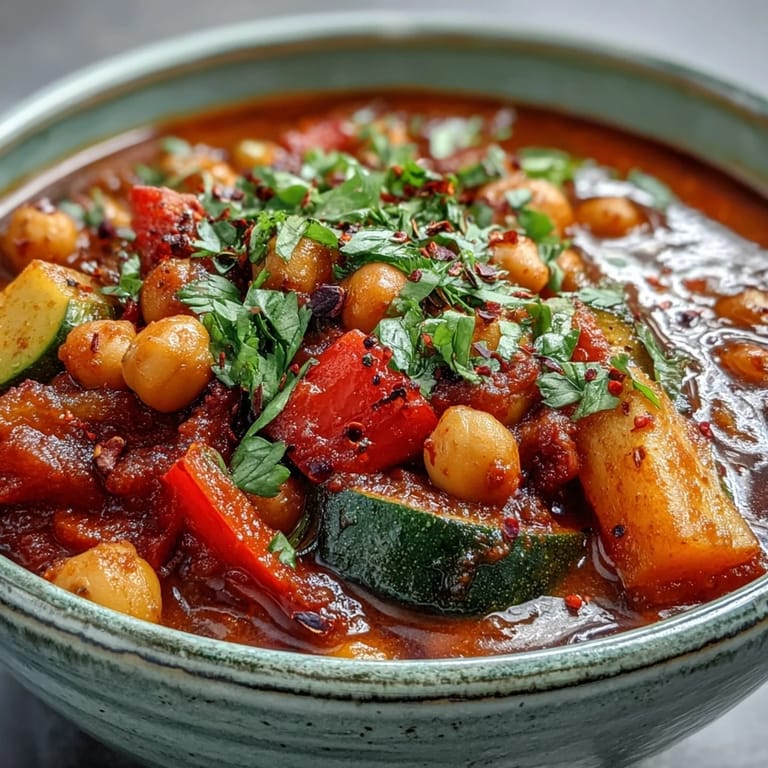
 There's something about the smell of cumin and coriander hitting hot oil that instantly transports me to a bustling Mediterranean market. I stumbled upon this stew during a particularly gray February when my body seemed to be asking for something warming and alive. One quiet Sunday afternoon, I threw together whatever vegetables were lingering in my crisper drawer and discovered that this humble combination of chickpeas and spices didn't just fill the kitchen with aroma—it filled me with a sense of calm I hadn't expected from a pot of stew.
I made this for my friend who'd just switched to a plant-based diet and felt a bit lost in the kitchen. Watching her take that first spoonful and close her eyes, then look up and say it tasted like real food—not a sacrifice—that moment made me understand why I keep coming back to this recipe. It's become the dish I reach for when I want to nourish someone without making a big deal about it.
Ingredients
- Olive oil: Use a good quality one you actually like tasting, because the heat will coax out its personality and it matters more than you'd think in a simple dish like this.
- Onion, garlic, carrots, bell pepper, and zucchini: The backbone of flavor—don't skip the garlic or rush the onions, as those minutes let everything start speaking to each other.
- Chickpeas: Rinse them well under cold water to remove excess sodium and that slightly metallic taste from the can.
- Ground cumin: This is your anchor spice; it's warm and earthy without being aggressive.
- Ground coriander: Adds a subtle citrus note that brightens everything without you quite knowing why.
- Smoked paprika: The backbone of depth—don't use regular paprika or you'll lose that smoky whisper.
- Ground turmeric: A half teaspoon is enough to add golden color and anti-inflammatory promise without overwhelming the palate.
- Chili flakes: Start conservative here; you can always add more but you can't take it back.
- Sea salt and black pepper: Taste as you go because different broths carry different salt levels.
- Diced tomatoes: Canned works beautifully and saves you the work of fresh tomato prep.
- Vegetable broth: A good broth matters—it's the foundation of everything tasting intentional rather than flat.
- Spinach or kale: Added at the end so it stays bright green and tender, not sad and gray.
- Lemon juice: The magic ingredient that appears at the very end to wake everything up and remind your taste buds they're alive.
- Fresh cilantro or parsley: Scatter this on top like you mean it; herbs change the entire energy of a dish.
Tired of Takeout? 🥡
Get 10 meals you can make faster than delivery arrives. Seriously.
One email. No spam. Unsubscribe anytime.
Instructions
- Heat your oil and soften the onion:
- Pour olive oil into your pot and let it warm until it shimmers slightly, then add diced onion and let it sit undisturbed for a minute before stirring. Those first few minutes are when the onion releases its sweetness and loses that sharp bite, so don't rush it.
- Build the vegetable foundation:
- Add your garlic, carrots, bell pepper, and zucchini, stirring occasionally as they soften and start to release their own flavors into the oil. You'll notice the kitchen starts to smell different after just a couple minutes—that's your cue that things are happening.
- Bloom the spices:
- Stir in all your dried spices and let them cook for a full minute; this brief heat brings them to life and makes them taste roasted rather than dusty. You'll smell when they're ready—the aroma becomes almost intoxicating.
- Add the heartier ingredients:
- Pour in your chickpeas, tomatoes, and broth, then bring everything to a gentle boil before lowering the heat to a simmer. Let it bubble softly, stirring now and then, as the flavors meld and deepen over twenty to twenty-five minutes.
- Finish with greens and brightness:
- Stir in your spinach or kale and watch it wilt into the stew almost immediately, then squeeze in that lemon juice and taste everything. Adjust salt and spice if needed, trusting your own palate rather than any recipe.
 Save to Pinterest
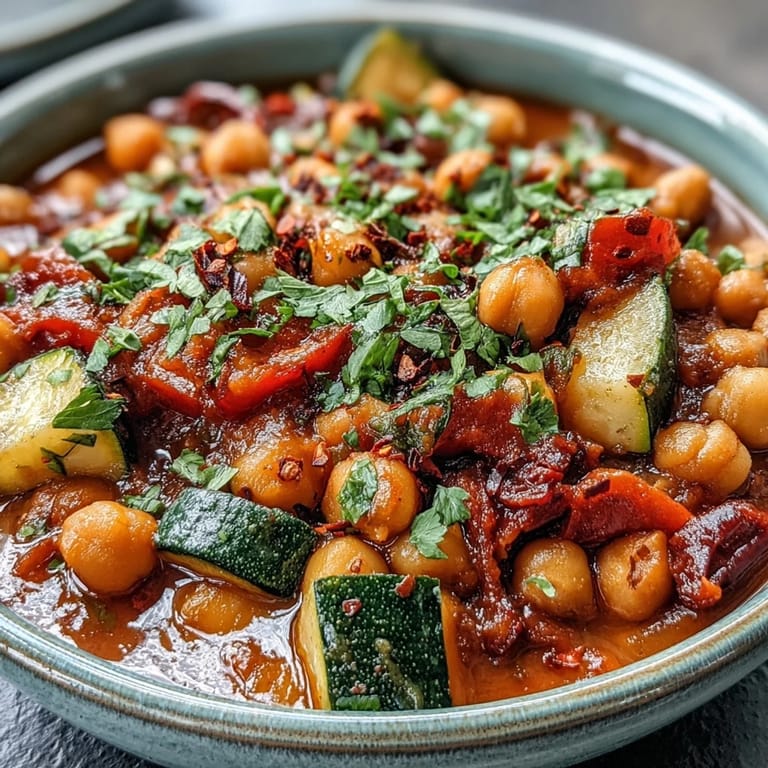
 On a particularly chaotic evening, I served this stew to my family when everything else had fallen apart that day, and somehow that simple bowl of warmth became the thing everyone remembered about that night. It taught me that food doesn't need to be complicated to feel like care.
The Magic of Blooming Spices
When you cook dried spices in hot oil for just one minute before adding liquid, something chemical and wonderful happens—they transform from powdery and slightly bitter into something aromatic and alive. I learned this by accident when I added my spices too early once and the stew tasted flat no matter what I did, and I've never made that mistake twice. It's a small gesture that changes everything, and it's become the part of cooking where I feel most present, standing there letting the smell fill my senses.
Why This Stew Actually Improves Overnight
Spice-forward dishes like this one reveal new layers as they sit in the refrigerator, which is why making extra feels like a gift to your future self. The longer the spices and vegetables spend together, the more their flavors settle and integrate, creating something more rounded and complex than what you served on day one. This is one of the few times in cooking where patience genuinely pays off without requiring any extra effort on your part.
Making It Your Own
The skeleton of this stew is sturdy enough to welcome your own additions and adjustments without losing its soul. I've added sweet potato for earthiness, eggplant for creaminess, and even a handful of spinach or kale that was on its way out, and the stew welcomed each change like it had always been meant to be there. The spices are confident enough to hold the dish together whether you follow it exactly or treat it like a suggestion.
- Blend a cup of finished stew and stir it back in if you want the texture to be creamier without adding dairy.
- Serve it over rice, quinoa, or crusty bread to make it feel like more of a complete meal.
- Taste and adjust the chili flakes and salt at the very end, since everyone's heat preference and sodium tolerance is different.
 Save to Pinterest
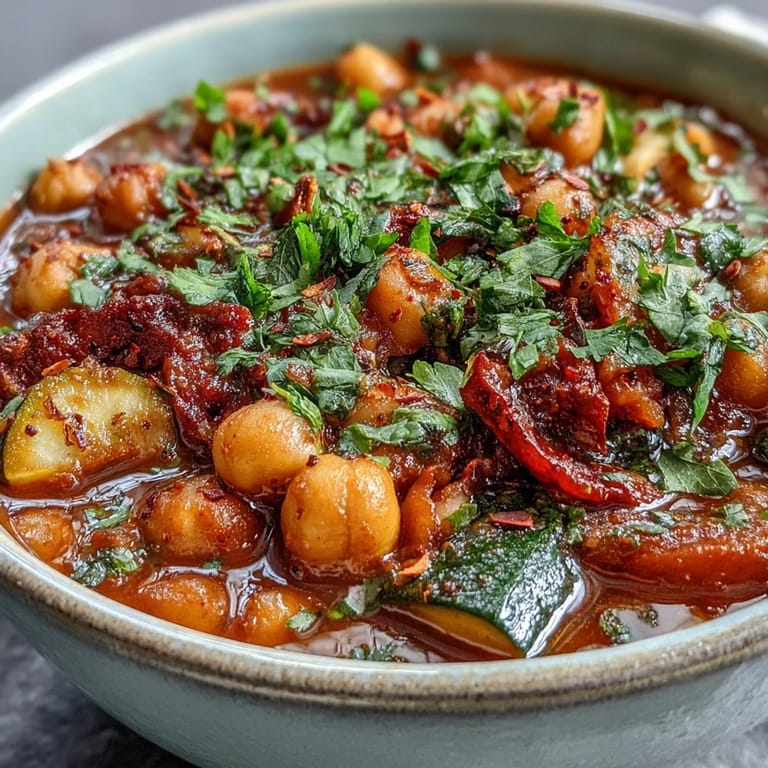
 This stew has become my go-to when I need to feed someone or quiet my own restless mind with something nourishing and real. It's taught me that the best recipes aren't the most complicated ones—they're the ones that taste like someone genuinely cared.
Recipe Questions & Answers
- → How long does this stew keep in the refrigerator?
The stew stores well for up to 4-5 days in an airtight container in the refrigerator. The flavors actually develop and deepen over time, making it an excellent option for meal prep.
- → Can I freeze this stew?
Yes, this freezes beautifully for up to 3 months. Let it cool completely before transferring to freezer-safe containers. Thaw overnight in the refrigerator and reheat gently on the stovetop.
- → What can I serve with this stew?
This pairs wonderfully with crusty bread for dipping, brown rice, quinoa, or even couscous. The starch helps soak up the flavorful broth and makes for a more filling meal.
- → How can I make this stew creamier?
For a creamier texture, blend about one cup of the finished stew and stir it back into the pot. Alternatively, add a splash of coconut milk during the last few minutes of cooking.
- → Can I use dried chickpeas instead of canned?
Absolutely. Soak 1 cup of dried chickpeas overnight, then cook them until tender before adding to the stew. This will extend the total cooking time but yields excellent results.
- → Is this suitable for meal prep?
Perfect for meal prep. The stew reheats beautifully and actually tastes better the next day as the spices have more time to meld. Portion into individual containers for easy grab-and-go lunches.