 Save to Pinterest
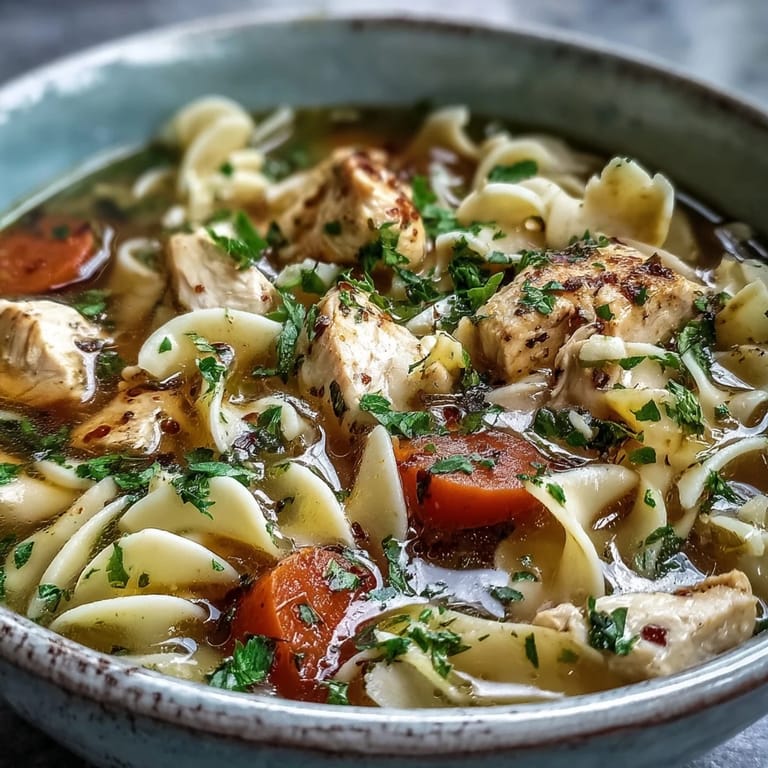
 There's something about the smell of chicken broth simmering that makes everything feel manageable, even on the greyest afternoons. My mom used to make this soup on days when the house felt too quiet, and somehow by the time it was ready, the whole place felt warm again. It's one of those recipes that doesn't demand much from you—just honest ingredients and a little patience—but it gives back comfort in ways that feel almost disproportionate to the effort. I've made it countless times now, and it never fails to deliver exactly what I need.
I made this for my neighbor during a particularly rough week, and I'll never forget how she teared up slightly when she tasted it. It wasn't fancy or complicated, but that seemed to be exactly the point. There's a reason chicken noodle soup shows up in every culture's comfort food canon—it just works.
Ingredients
- Boneless, skinless chicken breasts (2, about 350 g, diced): Cut them into bite-sized pieces so they cook quickly and evenly; this way they stay moist and tender rather than turning stringy.
- Medium onion (1, diced): This is your flavor foundation, so take a moment to dice it fine enough that it softens completely into the broth.
- Medium carrots (2, peeled and sliced): The natural sweetness balances everything, and slicing them rather than dicing means they stay visible and appealing in the bowl.
- Celery stalks (2, sliced): Don't skip this; it adds a subtle earthiness that makes the broth taste deeper and more thoughtful.
- Garlic cloves (2, minced): Mince it fine so it disperses throughout the pot and adds brightness without any harsh edges.
- Low-sodium chicken broth (1.5 liters or 6 cups): Low-sodium gives you control over the final salt level, which matters more than you'd think.
- Egg noodles (120 g or 4 oz): These are essential to the character of the soup; they soften just enough to absorb flavor while still holding their shape.
- Bay leaf (1): This single leaf does quiet work in the background, adding complexity you can't quite identify but definitely notice.
- Dried thyme (1/2 teaspoon): Use a light hand here—it should whisper, not shout.
- Dried parsley (1/2 teaspoon, plus extra for garnish): Fresh would be nicer, but dried works beautifully and you'll have it on hand.
- Salt and freshly ground black pepper (to taste): Always taste before serving; you might need more than you expect.
- Olive oil (2 tablespoons): This is just enough to soften the vegetables without making the final soup feel heavy.
Tired of Takeout? 🥡
Get 10 meals you can make faster than delivery arrives. Seriously.
One email. No spam. Unsubscribe anytime.
Instructions
- Sauté the foundation:
- Warm the olive oil in a large pot over medium heat, then add the onion, carrots, and celery all at once. Let them soften for about 4 to 5 minutes, stirring occasionally, until you can smell the sweetness starting to build and the onion turns translucent.
- Wake up the garlic:
- Stir in the minced garlic and let it cook for just 1 minute—any longer and it can turn bitter. You'll know it's ready when the kitchen fills with that distinctive garlicky aroma.
- Begin with the chicken:
- Add the diced chicken to the pot and stir it around for 3 to 4 minutes, cooking it just until the outside is no longer pink. You're not trying to cook it through yet; that happens later in the broth.
- Build the broth base:
- Pour in the chicken broth slowly so it mixes evenly with everything in the pot. Add the bay leaf, thyme, parsley, and a generous pinch of salt and pepper, then bring the whole thing to a gentle boil.
- Develop flavor with time:
- Reduce the heat and let it simmer quietly for 10 minutes. This gives the chicken time to cook through and the broth time to absorb all the flavors from the vegetables and herbs.
- Add the noodles:
- Stir in the egg noodles and simmer for another 8 to 10 minutes, until both the noodles and chicken are cooked through. The broth should be clear and the noodles should have just a slight firmness to them.
- Taste and adjust:
- Remove the bay leaf and have a spoonful of broth. Add more salt, pepper, or herbs if something feels like it's missing—this is the moment to make it exactly yours.
- Serve with intention:
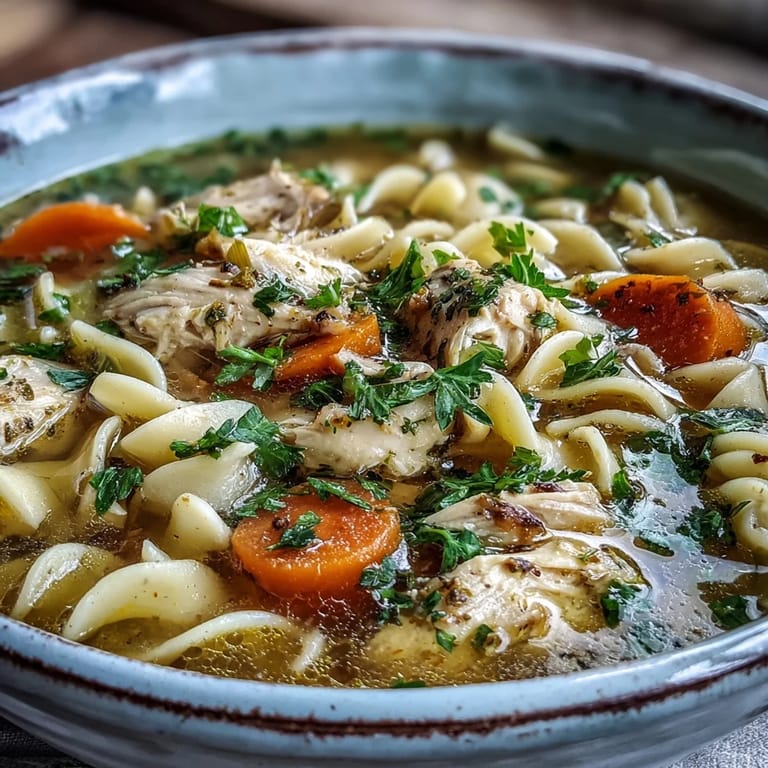
- Ladle the soup into bowls and scatter a pinch of fresh parsley on top. The green adds both flavor and a visual reminder that this soup is alive with care.
 Save to Pinterest
 Years later, my daughter asked me to teach her this recipe because she wanted to make it for a friend who'd just moved to the city. Watching her focus intently on dicing the vegetables and waiting for the broth to smell just right—that's when I understood this soup isn't really about the ingredients at all. It's about the intentional slowness of care.
When to Reach for This Soup
Chicken noodle soup is one of those recipes that works in almost every situation, though certain moments make it shine even brighter. A cold Tuesday in February when the sun sets at 5 p.m., a day when someone you care about isn't feeling well, the kind of evening when you need to do something kind for yourself without overthinking it—these are the times it earns its place on the table. I've also made it on nights when I didn't know what else to cook and had a mostly empty refrigerator, and it saved me every time.
The Quiet Wisdom of Simplicity
There's a reason this soup has stayed in kitchens for generations—it's not trying to be anything other than what it is. No fancy techniques, no ingredients you can't find, no surprises. The power comes from respecting each component: good broth, properly cooked chicken, vegetables that soften enough to flavor everything but stay distinct enough to be interesting. Sometimes the most memorable meals aren't the complicated ones; they're the ones that understand exactly what you need and deliver it without fuss.
Small Adjustments That Matter
Once you've made this soup a few times, you'll start noticing little tweaks that make it more yours. Some people swear by a splash of lemon juice stirred in at the end, which brightens everything and cuts through any heaviness. Others add a pinch of nutmeg to the broth, which sounds odd until you taste how it deepens the overall flavor without announcing itself. A fresh thyme sprig instead of dried, a small handful of frozen peas stirred in during the last few minutes, or even a touch of white pepper instead of black—these aren't corrections to the recipe, just conversations you're having with it.
- Trust your instincts about seasoning; what tastes right to you is what matters most.
- If you're making this for someone with specific dietary needs, check your broth and noodle labels carefully for hidden allergens.
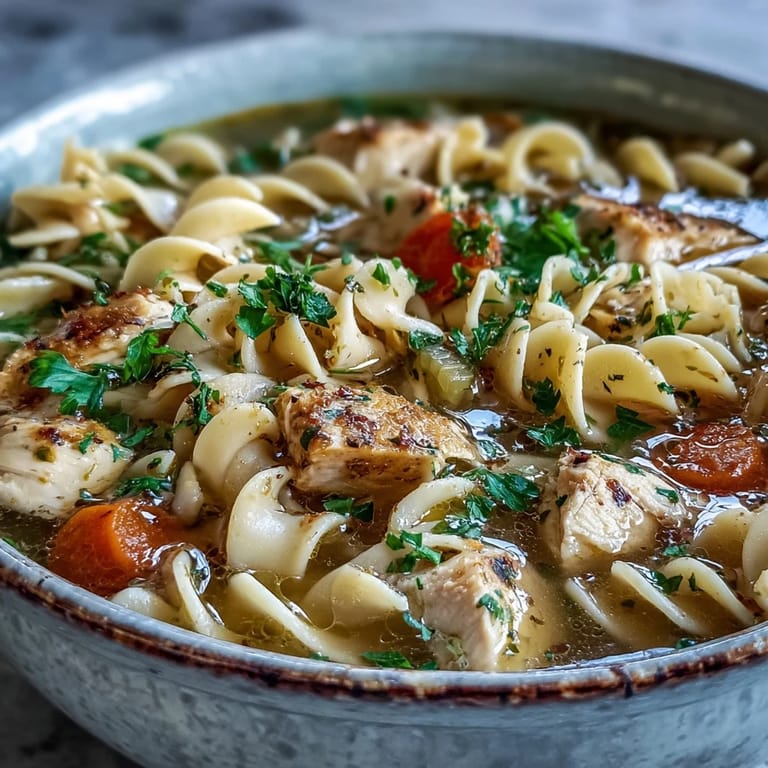
- Leftover soup keeps beautifully for three days in the refrigerator, and it often tastes even better the next day.
 Save to Pinterest
 This soup has been in my rotation long enough that making it feels less like cooking and more like a small ritual I can lean on. That's the real gift of a recipe this honest—it's always there, always reliable, and somehow always exactly what you needed.
Recipe Questions & Answers
- → Can I use chicken thighs instead of breasts?
Yes, boneless skinless chicken thighs work wonderfully and provide more flavor and moisture. Use the same amount and cooking time.
- → How do I store leftover chicken noodle soup?
Store in an airtight container in the refrigerator for up to 4 days. Note that noodles will absorb broth over time, so you may need to add extra liquid when reheating.
- → Can I freeze this soup?
Yes, but for best results, freeze the soup without the noodles. Cook and add fresh noodles when reheating. Freeze for up to 3 months.
- → What vegetables can I add or substitute?
Feel free to add peas, corn, green beans, or potatoes. You can also substitute parsnips for carrots or add spinach at the end for extra greens.
- → How can I make this soup more flavorful?
Use bone-in chicken for richer broth, add a splash of lemon juice before serving, or incorporate fresh herbs like dill or parsley. A parmesan rind simmered in the broth also adds depth.
- → What type of noodles work best?
Traditional egg noodles are ideal, but you can use pasta shapes like rotini, shells, or orzo. For gluten-free versions, use rice noodles or gluten-free pasta.