 Save to Pinterest
 There's something about the smell of maple warming in a saucepan that makes a November afternoon feel less gray. I stumbled onto this salad by accident one weeknight when I had a bunch of kale that needed rescuing and a bottle of maple syrup staring at me from the pantry. The combination felt risky at first, sweetness and mustard together, but the moment that warm dressing hit the massaged greens, something clicked. It became the salad I make when I want to feel like I'm doing something thoughtful for myself without overthinking it.
I made this for a friend who claimed she didn't eat salad, and she went back for seconds without thinking about it. That's when I realized this wasn't really a salad person's salad, it was just food that happened to be good and good for you at the same time. She texted me the recipe request the next day, which felt like a small victory in the kitchen.
Ingredients
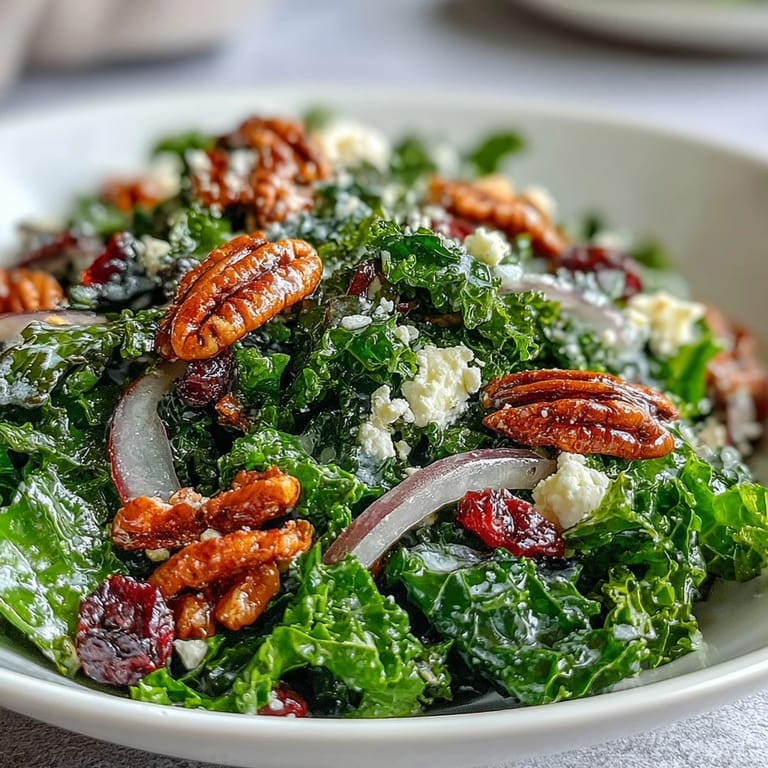
- Curly kale: Look for the deepest green bunch you can find, with leaves that feel sturdy but not woody, and don't skip the massaging step no matter how silly it feels.
- Olive oil: You need two amounts here, so read carefully, and use something you'd actually taste on its own since it shows up in both the massage and the dressing.
- Sea salt: This one's for the massage and makes a noticeable difference in how tender the kale becomes.
- Dried cranberries: These keep the salad from feeling too heavy, and their tartness cuts through the maple richness beautifully.
- Toasted pecans or walnuts: Toasting them yourself makes them crunchier, but honestly, store-bought toasted ones work fine if you're short on time.
- Red onion: Slice it thin so it doesn't overpower everything, and it adds a sharp pop that balances the warm sweetness.
- Feta cheese: Optional, but the salty tanginess reminds you this is still a vegetable situation and not dessert.
- Pure maple syrup: This is the dressing's backbone, so use real maple syrup and not the pancake stuff, the difference is real.
- Dijon mustard: The fancy kind in a small glass jar tastes noticeably better and brings a sophistication that ballpark mustard just can't match.
- Apple cider vinegar: It adds a gentle fruitiness that keeps the dressing from tasting one-dimensional.
- Black pepper and salt for the dressing: Season conservatively at first, you can always add more but you can't take it out.
Tired of Takeout? 🥡
Get 10 meals you can make faster than delivery arrives. Seriously.
One email. No spam. Unsubscribe anytime.
Instructions
- Massage your kale like it owes you money:
- Tear the leaves off the tough center stems and pile them into a big bowl, then drizzle with that one tablespoon of oil and a pinch of sea salt. Use your hands to really work the leaves, squeezing and folding them until they stop being that aggressive kale-green and become softer and brighter. It takes about two or three minutes, and yes, you'll feel a little ridiculous, but this step actually makes the leaves tender enough to enjoy.
- Create the dressing warmth:
- Pour the maple syrup into a small saucepan and set the heat to low, then whisk in your Dijon mustard, apple cider vinegar, pepper, and salt until everything's smooth and combined. Once it's warm and smells like fall, slowly drizzle in that three tablespoons of olive oil while whisking constantly so it emulsifies into something silky and cohesive, then take it off the heat because you want it warm, not hot.
- Bring it all together:
- Pour that warm dressing right over your massaged kale while it's still warm so the warmth keeps everything tender, then toss it all together so every leaf gets coated. The dressing will glisten and the kale will soften just a little more from the warmth, which is exactly what you want.
- Add the finishing touches:
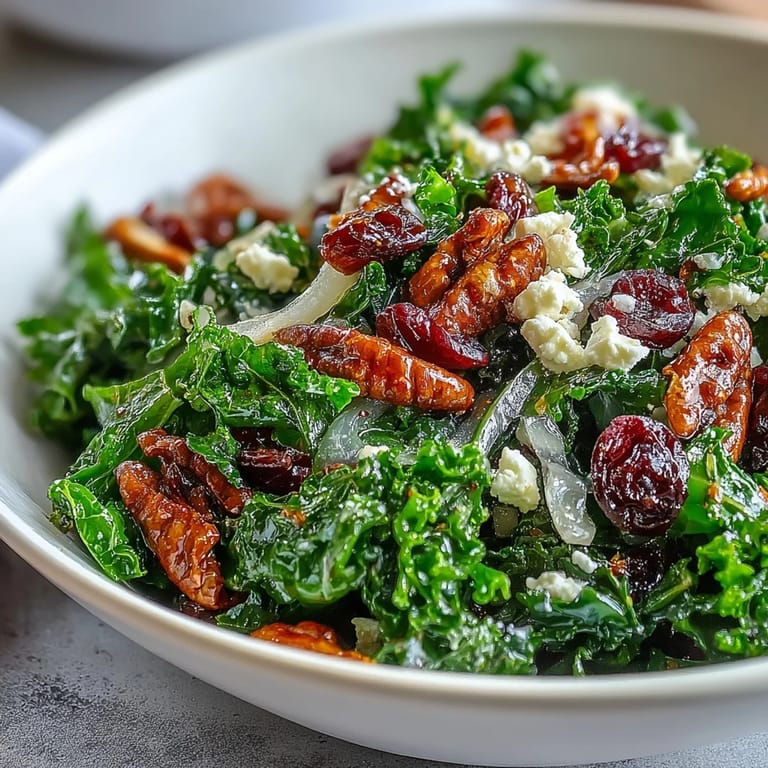
- Scatter the cranberries, nuts, and that red onion over top and toss gently one more time so everything's distributed evenly. If you're using feta, sprinkle it on just before serving so it doesn't get lost.
- Serve while the warmth is still there:
- Transfer everything to a platter or bowls right away and eat it while the dressing is still warm and the contrast with the cold nuts and cranberries is still happening. This isn't a salad that gets better sitting in the fridge.
 Save to Pinterest
 There was a moment, maybe three months into making this regularly, when I realized I was actually looking forward to eating kale, which felt like crossing some invisible line into genuine adulthood. My kitchen started to smell like maple and mustard in a way that became comforting instead of surprising.
When to Make This Salad
This salad arrives at that perfect moment when the weather turns cool but you're not ready for heavy food yet. I make it through fall and into early winter, served alongside roasted vegetables or grilled chicken, and it somehow feels both light and substantial. The warm dressing makes it feel like a cooked dish even though it's technically salad, which is its secret power.
Variations That Actually Work
The base of this salad is forgiving enough that you can play around without breaking it. I've added roasted butternut squash cubes in October, sliced apples in November, and even some crispy chickpeas when I wanted more protein and crunch. The maple-mustard dressing is the constant that makes everything work together, so keep that part honest and change everything else based on what's around.
Building Flavor Confidence
Making this salad taught me that sweet and savory aren't enemies if you balance them with something tart and something crunchy. The maple brings warmth, the mustard brings sharpness, the vinegar brings brightness, and the nuts and cranberries bring texture that keeps everything interesting. It's a small lesson in flavor that translates to bigger things in the kitchen.
- Taste the dressing on a tiny piece of kale before you commit the whole batch, dressing strength varies with different maple syrups.
- If you make this ahead, store the components separately and assemble just before eating so the kale stays vibrant and the nuts stay crispy.
- For a vegan version, swap the feta for nutritional yeast or just leave it out, the salad is perfect without it.
 Save to Pinterest
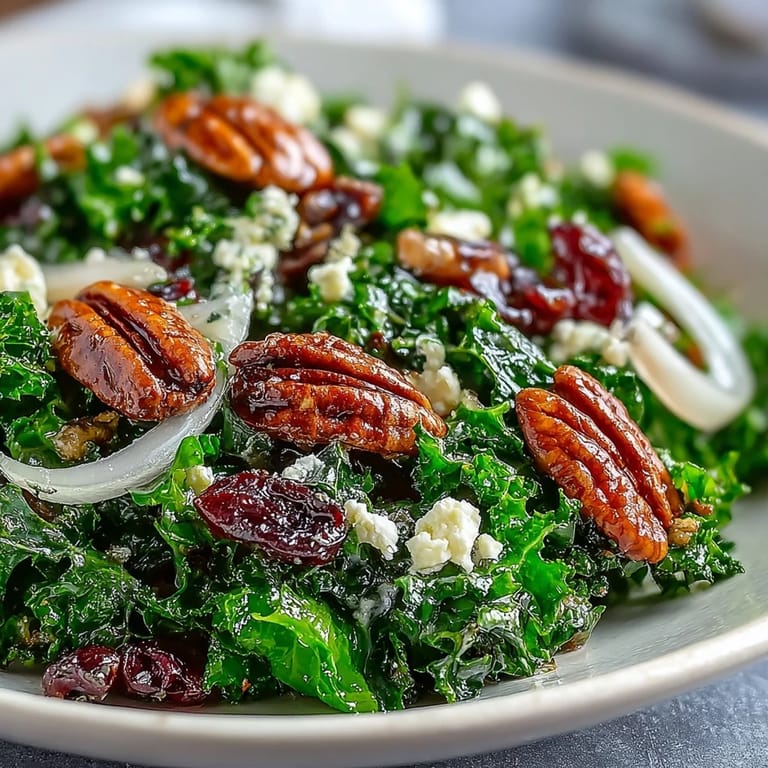
 This salad became proof that eating well doesn't require drama or complicated techniques, just a little intention and the willingness to massage a vegetable. I still make it whenever the season shifts and I need something that tastes like taking care of myself.
Recipe Questions & Answers
- → Why massage the kale?
Massaging kale with olive oil and salt breaks down tough cell walls, transforming fibrous leaves into tender, vibrant greens. This 2-3 minute process makes the kale enjoyable to eat raw and helps it absorb dressing thoroughly.
- → Can I make this ahead?
The dressed kale holds up well for several hours, making it excellent for meal prep. Store components separately and combine when ready to serve. Add toasted nuts and cranberries just before serving to maintain texture.
- → What nuts work best?
Pecans offer buttery sweetness that complements the maple glaze, while walnuts provide earthy depth. For nut allergies, toasted pumpkin seeds or sunflower seeds deliver satisfying crunch without the allergens.
- → Is the dressing served warm?
Yes, gently warming the maple-mustard mixture helps emulsify the dressing and creates a comforting bowl. The slight heat also softens the kale further and enhances the flavors. Serve immediately after tossing for best results.
- → Can I substitute the kale?
Baby spinach works as a tender alternative—skip the massaging step since spinach leaves are naturally delicate. Keep in mind that spinach won't hold up as well with warm dressing and becomes soggy more quickly than kale.
- → How do I make it vegan?
Simply omit the feta cheese or substitute with plant-based crumbles. All other ingredients including maple syrup, Dijon mustard, and olive oil are naturally vegan, making this bowl easily adaptable to plant-based diets.