 Save to Pinterest
 There is nothing quite like the way a summer kitchen smells when peach pie is in the oven. My grandmother always said you could tell everything about a baker by their crust, and she would watch me like a hawk the first dozen times I tried to master it. The peaches have to be perfect, barely yielding to pressure, with that unmistakable floral sweetness that fills the whole house. I learned the hard way that rushing the chilling time is what separates a decent pie from an unforgettable one.
Last summer, my neighbor brought over a bushel of peaches from her tree, and we spent the entire afternoon making three pies together. She taught me the trick of mixing yellow and white peaches for depth of flavor, something I had never considered before. By the time we pulled the last one from the oven, her whole family had gathered around the kitchen, drawn in by that incredible cinnamon peach aroma.
Ingredients
- All-purpose flour: This forms the foundation of your crust, providing structure while keeping it tender
- Unsalted butter: Cold butter creates those flaky layers that make a pie crust exceptional, so keep it chilled until the moment it hits the flour
- Salt: Just a small amount enhances all the flavors and balances the sweetness
- Granulated sugar: A touch in the crust helps with browning and adds subtle sweetness
- Ice water: The key to keeping butter cold and preventing a tough crust, add it gradually and stop as soon as the dough comes together
- Ripe peaches: The star of the show, use peaches that give slightly to pressure and smell absolutely fragrant
- Granulated sugar: Sweetens the filling while drawing out some of the peach juices to create that beautiful syrupy consistency
- Cornstarch: Essential for thickening the peach juices so you get distinct slices rather than a soupy mess
- Lemon juice: Brightens the flavor and helps balance the sugar while keeping peaches from oxidizing
- Ground cinnamon and nutmeg: These warm spices complement peaches beautifully without overpowering their delicate flavor
- Vanilla extract: Adds depth and rounds out all the flavors
- Egg: Beaten egg creates that gorgeous golden brown finish on the crust
- Coarse sugar: Optional but adds a delightful crunch and sparkle to the finished pie
Tired of Takeout? 🥡
Get 10 meals you can make faster than delivery arrives. Seriously.
One email. No spam. Unsubscribe anytime.
Instructions
- Prepare the crust:
- Whisk flour, sugar, and salt in a large bowl, then work in cold butter with your fingers or pastry blender until you have coarse crumbs. Add ice water one tablespoon at a time, mixing gently until the dough just holds together when squeezed. Divide in half, form into discs, wrap tightly, and chill for at least one hour.
- Prepare the filling:
- Toss the sliced peaches with sugar, cornstarch, lemon juice, cinnamon, nutmeg, salt, and vanilla in a large bowl. Let the mixture sit for about 10 minutes while you roll out the crust, which helps the cornstarch start working.
- Preheat your oven:
- Get your oven to 400°F so it is fully hot and ready when your pie is assembled.
- Roll out the bottom crust:
- On a well-floured surface, roll one dough disc into a circle large enough to fit your 9-inch pie dish with some overhang. Carefully transfer the dough to the dish and trim any excess hanging over the edges.
- Add the peach filling:
- Pour the peach mixture into the prepared crust, spreading the slices evenly. Mound them slightly in the center since they will settle during baking.
- Add the top crust:
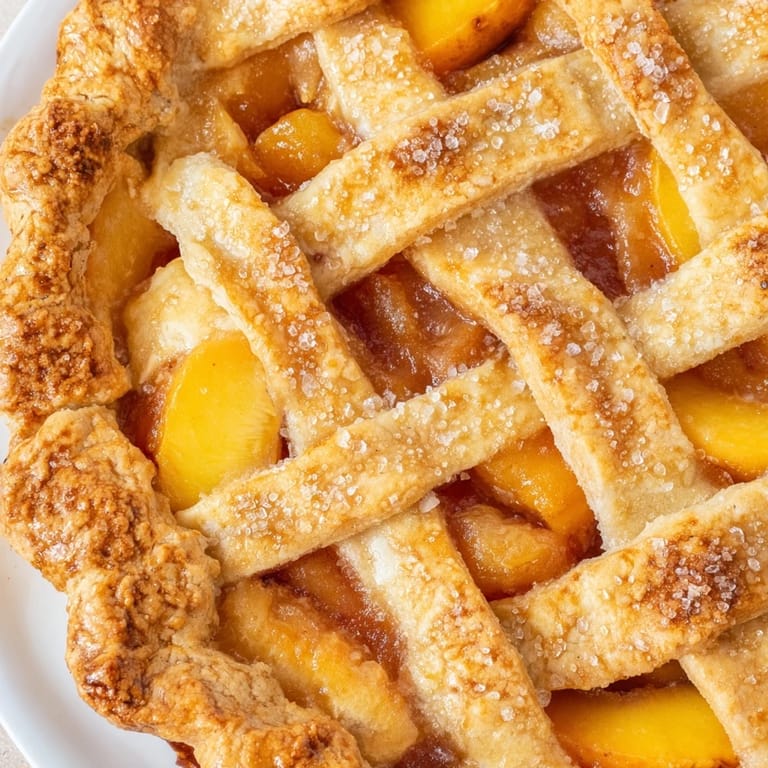
- Roll out the second dough disc and drape it over the filling. Trim, seal, and crimp the edges to lock everything in, then cut several slits or create a lattice pattern to let steam escape.
- Apply the egg wash:
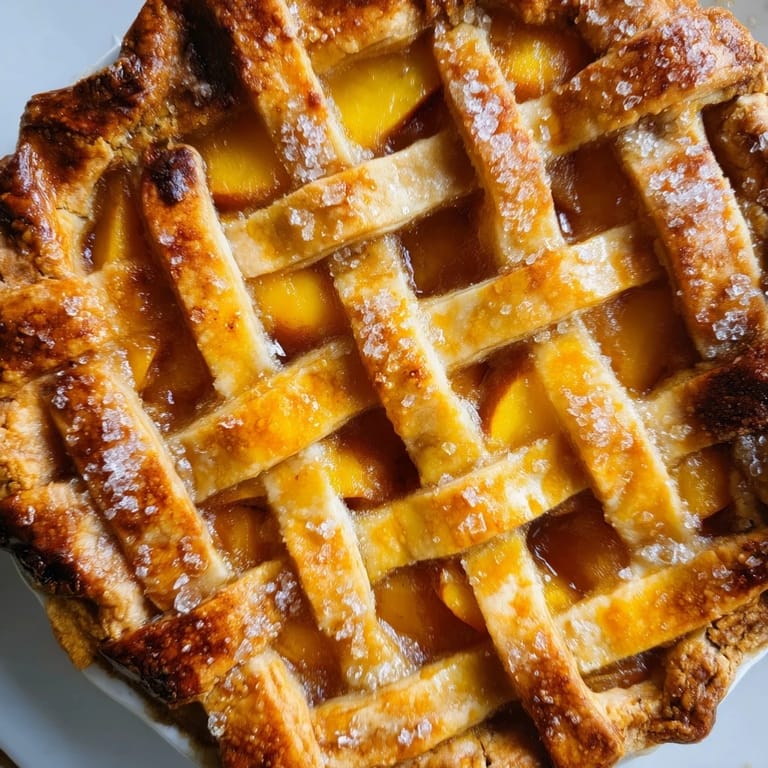
- Brush the entire top crust with beaten egg using a pastry brush, then sprinkle with coarse sugar for that bakery finish if you like.
- Bake to perfection:
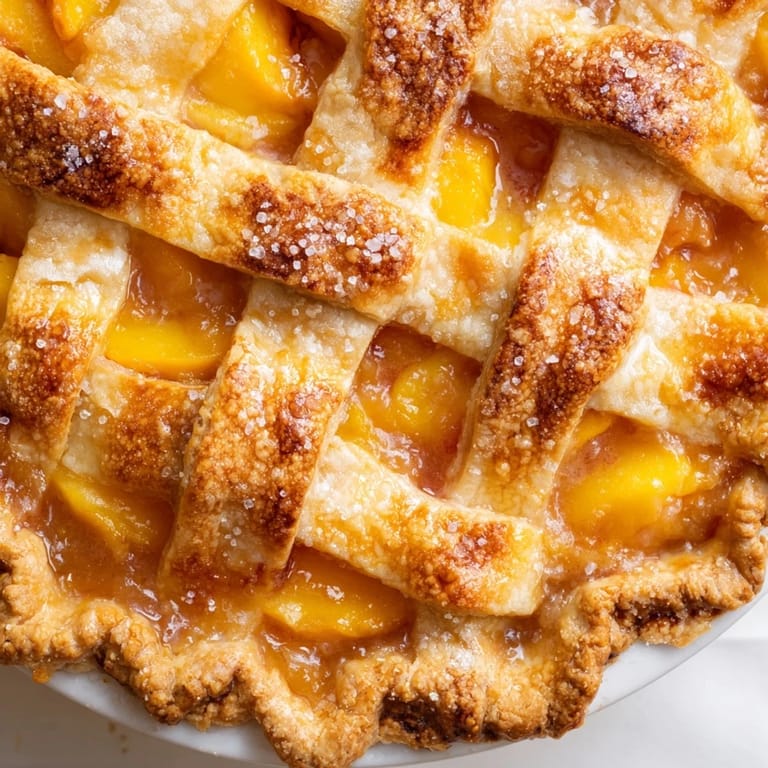
- Bake for 50 minutes until the crust is deep golden brown and you can see the filling bubbling vigorously through the vents. If the edges start browning too quickly, shield them with a ring of foil.
- Let it set:
- Cool on a wire rack for at least two hours before slicing, which gives the filling time to set properly so you get clean, beautiful servings.
 Save to Pinterest
 This was the first pie I ever made entirely from scratch, and I remember feeling so proud when my family actually asked for seconds. There is something deeply satisfying about turning simple fruit and flour into something that brings people together around the table, lingering long after dinner is over.
Choosing the Perfect Peaches
The best pies start with peaches that are at the peak of ripeness, giving just slightly when you press them. Avoid rock-hard peaches that will never develop true flavor, or overripe ones that will turn to mush during baking. I always smell them first because a fragrant peach promises a fragrant pie.
Mastering the Crust
Keep everything cold, including your hands and work surface, and handle the dough as little as possible. If the dough starts feeling sticky or soft, pop it back in the refrigerator for 15 minutes. The specks of butter you see in the dough are exactly what creates those beautiful flaky layers.
Serving Suggestions
There is nothing wrong with eating a slice plain, but a scoop of high-quality vanilla ice cream creates that perfect hot and cold contrast. Fresh whipped cream with a hint of vanilla also works beautifully. This pie is best enjoyed the day it is made, though it will keep at room temperature for up to two days.
- Recover leftovers loosely with foil rather than wrapping tightly to preserve the crust
- Warm individual slices in the oven for 10 minutes if serving the next day
- The pie freezes well for up to three months if wrapped tightly before freezing
 Save to Pinterest
 Every bite of this peach pie tastes like summer itself, and I hope it becomes as beloved in your kitchen as it has in mine.
Recipe Questions & Answers
- → How do I know when peaches are ripe enough?
Gently press the peach - it should yield slightly without being mushy. Look for fragrant fruit with a golden-yellow background color. Avoid peaches with green undertones or hard spots, as they won't soften properly during baking.
- → Can I use frozen peaches instead?
Yes, thaw frozen peaches completely and drain excess liquid before using. You may need to increase the cornstarch by 1-2 teaspoons since frozen fruit releases more moisture during baking.
- → Why is my pie crust soggy on the bottom?
This usually happens when the filling is too wet or the oven temperature is too low. Ensure your peaches aren't overly juicy, bake at 400°F initially, and place the pie on the lower oven rack. A baking sheet on the rack below catches drips.
- → How long should the pie cool before cutting?
Allow the pie to cool for at least 2 hours at room temperature. This crucial step lets the filling set properly. Cutting too soon will result in a runny mess. For cleanest slices, refrigerate after cooling and serve chilled or gently reheated.
- → Can I make this ahead of time?
Prepare the dough up to 2 days in advance and refrigerate. The filling can be mixed a few hours before baking. Once baked, the pie keeps well at room temperature for 2 days or refrigerated for up to 5 days. Reheat individual slices in a 350°F oven for 10-15 minutes.
- → What's the difference between a lattice and full top crust?
A lattice top allows more steam to escape, creating a thicker, jammy filling, while a full crust produces a juicier interior. Both bake equally well - lattice requires cutting dough strips and weaving them, while a full crust needs vent slits cut into the surface.