 Save to Pinterest
 My friend Sarah brought roasted cabbage wedges to a potluck last spring, and I watched people go back for thirds, which never happens with vegetables. When she finally shared the recipe, the magic revealed itself: crispy, caramelized edges paired with a silky tahini sauce that tastes like you're eating at a proper Middle Eastern restaurant. The first time I made them solo, the kitchen filled with this nutty, toasted aroma that had my roommate wandering in asking what smelled so good. Now this dish has become my secret weapon whenever I need something that feels fancy but takes hardly any effort.
I made this for my partner's parents during a casual dinner, expecting it to be overshadowed by the main course, but instead everyone asked for the recipe before dessert even arrived. There's something about roasted cabbage with tahini that catches people off guard in the best way—it's humble but feels elevated, simple but memorable. That night made me realize how a vegetable-forward dish could be the thing everyone talks about.
Ingredients
- 1 medium green cabbage (about 2 lbs), cut into 8 wedges, core intact: Keeping the core in holds each wedge together during roasting, so you get those beautiful, intact pieces instead of loose leaves falling apart.
- 2 tbsp olive oil: This amount is just enough to coat and crisp without making things greasy, though I learned to drizzle a touch more if your cabbage seems dry.
- 1/2 tsp kosher salt and 1/4 tsp freshly ground black pepper: Season generously here because the roasting process mellows flavors, and you want that bite to come through.
- 1/3 cup tahini (sesame seed paste): Buy the kind that's just ground sesame seeds with maybe a bit of salt, not the sweetened stuff, because you want that nutty depth.
- 1 small garlic clove, finely grated: Grating rather than mincing makes the garlic distribute evenly and taste less harsh once it hits the lemon juice.
- 2 tbsp fresh lemon juice: Fresh is non-negotiable here—bottled lemon juice won't give you that bright, alive quality the sauce needs to shine.
- 2 to 4 tbsp cold water: Start with 2 tablespoons and work up gradually, because tahini can seize if you dump water in all at once, and cold water whisks in more smoothly than room temperature.
- 1/4 tsp ground cumin and 1/4 tsp kosher salt: Cumin brings warmth and complexity, while the second salt hit balances the richness of the tahini.
- Toasted sesame seeds, fresh parsley or cilantro, smoked paprika or Aleppo pepper (optional garnish): These aren't just decoration—they add texture, color, and a final flavor layer that makes people pause mid-bite to notice.
Tired of Takeout? 🥡
Get 10 meals you can make faster than delivery arrives. Seriously.
One email. No spam. Unsubscribe anytime.
Instructions
- Get your oven hot and ready:
- Preheat to 425°F and line your baking sheet with parchment paper so cleanup is nearly effortless and nothing sticks. This high heat is what creates those browned, crisped edges that make roasted cabbage so addictive.
- Prepare and season the cabbage:
- Arrange your cabbage wedges on the sheet with space between each one, then drizzle with olive oil and season with salt and pepper on both sides. Don't be shy with seasoning at this stage—those flavors concentrate as the cabbage roasts.
- Let it roast and turn golden:
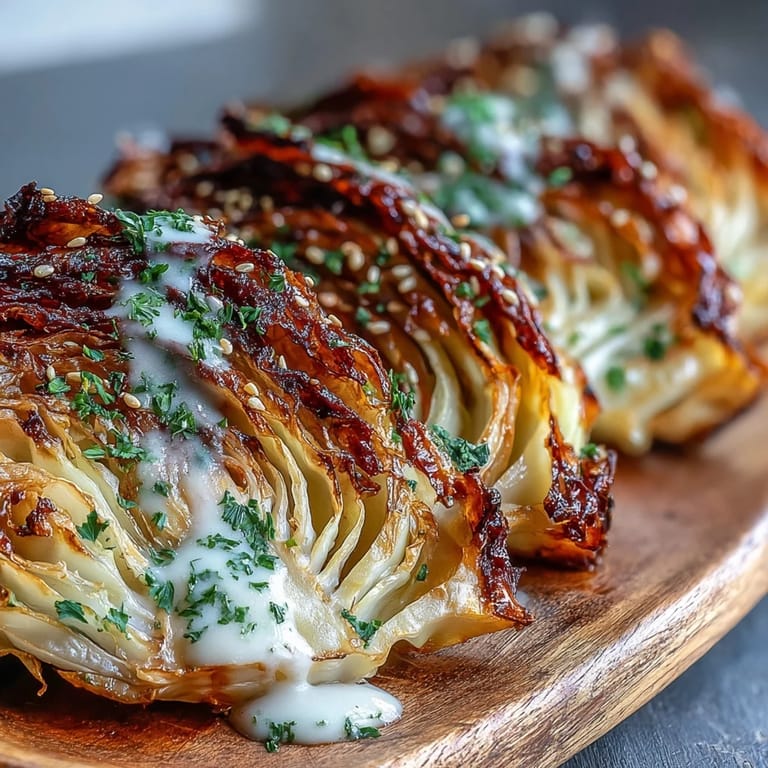
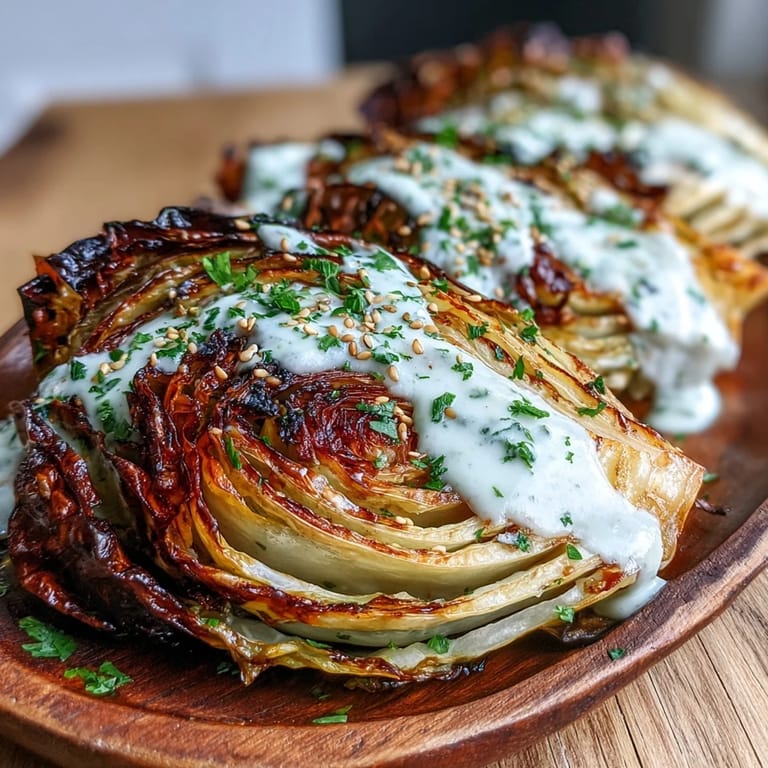
- Slide into the oven for 25 to 30 minutes, flipping halfway through so both sides get that beautiful brown color and caramelization. You'll know it's done when the edges are deeply browned and the cabbage yields easily to a fork.
- Build the tahini sauce while cabbage cooks:
- In a bowl, whisk tahini, grated garlic, lemon juice, cumin, and salt together, then gradually add cold water one tablespoon at a time, whisking constantly until you reach a smooth, pourable consistency. This is where patience matters—rushing the water in causes the sauce to seize and turn grainy.
- Plate and drizzle with confidence:
- Transfer your roasted cabbage wedges to a serving platter and generously drizzle with tahini sauce so it pools around each piece. If you're using the optional garnishes, sprinkle sesame seeds, fresh herbs, and a pinch of smoked paprika or Aleppo pepper over the top.
 Save to Pinterest
 There was an evening when my nephew, who claims to hate all vegetables, ate two wedges and asked if he could bring this to his school potluck. Watching someone taste cabbage and genuinely enjoy it, no negotiation required, reminded me why I love cooking—it's not about impressing people with complexity, it's about transforming something ordinary into something they actually want to eat.
Roasting Cabbage Is Basically Magic
Raw cabbage has this sharp, slightly sulfurous quality that makes people hesitant, but heat mellows all of that and brings out natural sweetness instead. The moment those wedges hit a hot oven, the transformation begins—the outer leaves start to caramelize, the inner layers turn silky and tender, and the whole vegetable becomes something you'd actually crave. I used to think cabbage was boring until I discovered what roasting could do.
Why Tahini Sauce Changes Everything
Tahini is just ground sesame seeds, but when you combine it with lemon juice, garlic, and a touch of cumin, something almost magical happens—you get this creamy, nutty, deeply flavorful sauce that makes people ask what you put in it. The sauce is rich enough to feel indulgent but light enough that it doesn't weigh you down, which is why it pairs so perfectly with roasted vegetables. I've started making extra tahini sauce just to have on hand for other roasted things.
How to Serve This With Confidence
Roasted cabbage wedges work as a side dish next to grains or proteins, but they also shine as the main event if you're eating plant-based or just in the mood for something lighter. At room temperature, they become a perfect addition to a mezze board alongside hummus, olives, and fresh bread. The beauty of this dish is its flexibility—serve it warm straight from the oven, or let it cool to room temperature for a different kind of satisfaction.
- Serve warm alongside rice, quinoa, or warm pita bread for a more substantial meal that feels complete and satisfying.
- Add a pinch of chili flakes to the tahini sauce if you like heat, or stir in pomegranate seeds right before serving for brightness and a pop of color.
- Red cabbage works too if you prefer it, though it may take a few extra minutes to become as tender as green cabbage.
 Save to Pinterest
 This recipe taught me that the simplest dishes often become the ones people remember most. There's something honest about roasted cabbage with tahini that makes people want to cook it at home.
Recipe Questions & Answers
- → How do I know when the cabbage is done roasting?
The cabbage wedges are ready when edges are deeply browned and caramelized, typically 25–30 minutes at 425°F. The wedges should feel tender when pierced with a fork, while the outer layers offer a satisfying crispiness.
- → Can I make this ahead of time?
Roast the cabbage up to 2 days in advance and reheat at 350°F for 10 minutes. Store the tahini sauce separately in the refrigerator—it actually thickens and flavors meld overnight, so prepare it ahead for the best taste.
- → What can I serve with roasted cabbage wedges?
Pair alongside grilled meats, falafel, or roasted vegetables. For a complete meal, serve over quinoa, rice, or with warm pita bread. The tahini sauce also complements roasted cauliflower, carrots, or sweet potatoes beautifully.
- → Why did my tahini sauce seize up?
Tahini naturally thickens when mixed with acidic ingredients like lemon juice. This is normal—simply whisk in cold water one tablespoon at a time until the sauce becomes smooth, creamy, and pourable again.
- → Can I use red cabbage instead?
Absolutely. Red cabbage works well and adds vibrant color, though it may require 5–10 minutes additional roasting time. The visual contrast against the creamy tahini sauce makes for an especially stunning presentation.
- → Is this dish freezer-friendly?
The roasted cabbage freezes well for up to 3 months in airtight containers. Thaw overnight in the refrigerator before reheating. However, the tahini sauce is best made fresh and stored separately in the fridge for up to a week.